
A recent story in the Wall Street Journal explained how the newly jobless may be eligible for employer-sponsored health insurance coverage at drastically reduced rates. Sounds like good news, right? Not if you’re an insurance agent. In fact, it’s a kind of reverse stimulus for those who make their living selling health coverage. Until now, a substantial portion of their business came from workers who had recently lost their jobs, since many newly unemployed workers are under pressure to replace workplace coverage with more affordable plans. Although the employees are legally entitled under federal law to “Cobra” their old coverage for up to 18 months, the costs can be quite high, especially if the original plan contained generous prescription benefits, low co-payments and other perks. Often, by bumping up co-pay amounts and reducing benefits somewhat, an insurance agent can coverage comparable to Cobra for significantly less.
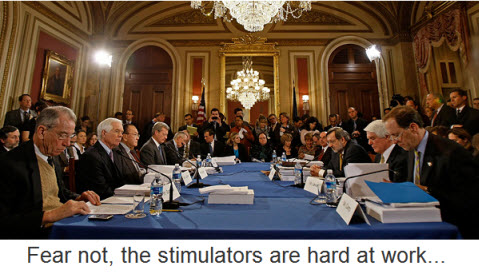
Now, though, with the government subsidizing 65% of the cost of a Cobra plan, the insured has no incentive to shop around. With the subsidy, a plan that would cost a worker $450/month can be had for just $150. One agent we know said the subsidy would have a devastating impact on insurance agents who specialize in health care. “This is the law of unintended consequences,” he said. “The government thinks it’s applying a stimulus, but it’s just going to throw taxpayer money at higher-cost plans,” while reducing the incentive of laid-off workers to look for a better deal.
Retroactive, Too!
The plan will be retroactive, allowing workers who did not initially opt for Cobra coverage to do so now. They will also be able to apply for a refund on premiums paid after the subsidy law was enacted on February 17. The number of workers who extend coverage through Cobra has been relatively small up till now because of the high cost of such plans. Employers are allowed to charge former workers up to 102% of the cost of premiums. This is surely a plan that every Keynesian can get behind.
(If you’d like to have Rick’s Picks commentary delivered free each day to your e-mail box, click here.)
Posted by Rick for Doug Graham:
Rick:
A couple of comments regarding today’s missive:
1) I sold my share of my business to my partners last August in the Bay Area, CA. I moved my family to Oregon. I was paying $1300 a month to blue cross CA to insure myself, wife and three kids. To add insult to injury in January BC of CA thought my premiums were too low and jacked them up another 10%. I had a good friend that was in the insurance biz and he got us all insured with blue cross in the current state (OR) at $740 a month. Not only do we save a pile, but the service is far better. We recently went to California on a return trip and they covered a routine visit for my wife to her old doc! So the system works.
So I am evidence of exactly what you cite.
2) You mention the unintended consequence of stealing opportunity from the insurance agent. True enough. But the politicians wax ad nausem about the ridiculous cost of healthcare. Won’t subsidizing insurance premiums to the gouging insurance companies (effectively price control) just allow health costs to remain high? I would think that allowing the system to compete at lower prices forces all participants to drive costs lower. If any industry needs help, it certainly is NOT the big healthcare insurance companies. They are a very large part of the problem. I have had skin cancer, I have paid for three child births (one was premature and spent 8 days in the expensive Neo ICU) and it would have been cheaper for me to self-insure over the last 15 years (cash instead of $15-20k per year in premiums).
Obama (and those that think he is all that), along with the majority of senators and congress are knuckleheads who likely have no idea of productive work, and the markets and how they work. Their first and likely last enterprising moment was filling out the financial aid form for law school. Since then it has been a never ending ride sucking the blood out of the dollar corpse, making financial promises which cannot be kept (huh, kinda like an AIG CDS). It can go on for a very long time (as it has), but it can’t go on forever.
(sigh)
Doug Graham