
[Over the last three years, the Federal Reserve has conjured up trillions of dollars of funny money in an attempt to breathe some inflation back into the economy. The attempt has clearly failed. Now, it would appear, Britain has become the first country to throw in the towel on fiscal and monetary black magic. In effect, the country has decided to let deflation take its course, allowing the chips to fall where they may. In the essay below, "Cameroni," a frequent contributor to the Rick’s Picks forum, takes a close look at the decision and what it will mean not only for Britain, but the world. He concludes with a list that spells out what to expect, and the kind of pain we will experience as the world’s financial system comes very slowly back into balance in the years ahead. If his predictions are borne out, the standard of living is about to fall sharply for billions of people around the world RA]
David Cameron’s new Government in Britain announced Tuesday that it will introduce austerity measures to begin paying down the estimated one trillion (U.S. value) in debts held by the British Government. Lets let that sink in for a moment, for it is a stunning announcement. Now repeat it: Britain will introduce austerity measures in order to eliminate the deficit and begin paying down the national debt. And that being said, we have just received the signal to an end to global stimulus measures — one that puts a nail in the coffin of the debate on whether or not Britain would “print” her way out of the debt crisis. That would have virtually guaranteed an eventual hyperinflation that would have spread to all Western nations, destroying the U.S. dollar as the world’s reserve currency in the process and ending several hundred years of Western economic dominance.
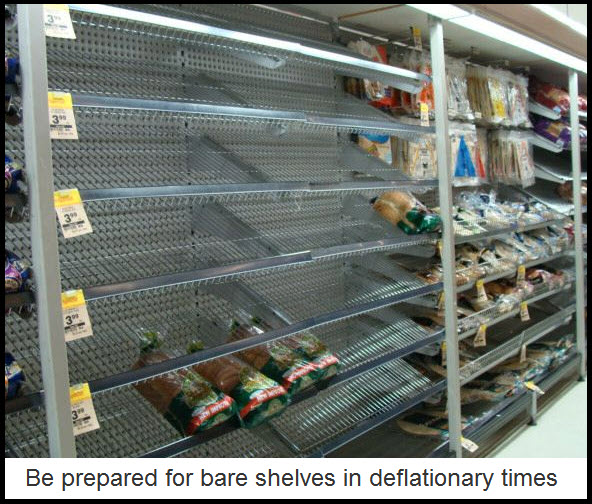
This is actually a celebratory moment although it will not feel like it for most. But wait. The U.S. did not say it would pay down its debts. And anyway, everyone knows that debt pile is too large to ever be repaid. They are wrong. And the U.S. does not need to send any particular message at this time anyway. The U.S. has been in a deflationary spiral since 2006, having discovered that nothing, not even oil flooding the Gulf, a nuclear North Korea threatening war, campaigns in Afghanistan and Iraq, nor threats that Israel might one day bomb Iran and shut down the oil pipe, can pump up energy prices enough to drive future inflation or save the economy the old-fashioned way. Not nearly enough to escape the gravity of the housing and asset collapse anyway.
‘Time to Rejoice’
We have run out of the ammo of cynicism and old-style politics. Debts will have to be paid. Creditor arrangements will be made, concessions granted, standards of living will decline and countries will be sent to the table to bargain in a cooperative effort to resolve credit imbalances. There will be horse-trades, payments out of key commodities and access granted where previously it has been denied. There will be recovery eventually and it is a better future than what a hyperinflation would bring us all. And yes, the bills will be settled. Time to rejoice.
To my way of thinking, the U.S. will not, cannot, resort to regular debt monetization, printing press economics or the eventual and guaranteed destruction of their currency, economy and way of life before attempting first to harness what appear to be insurmountable debts and obligations. That is particularly so if European nations and Britain (first among them) begin taking serious steps toward fiscal discipline and enacting measures of restraint. Many will argue against my theory. They will all be wrong. And so the English have opted to go with the devil they know. They have chosen a path that means their economy will contract, perhaps significantly. Unemployment will surge as public sector layoffs and the elimination of programs are required to harness the debt bomb are enacted, and all spending is carefully scrutinized, fleshed away, even eliminated.
Minimal Safety Net
Everything could conceivably be on the chopping block short of core government services, social service spending, basic medical services, pensions and the safety net itself. The debt is just so big that nothing less than all the efforts of Government and the cooperation of the majority of the public in accepting restraint will allow it to work. What does it mean in the wider picture when one of the leading members of the G8 has deliberately chosen the path that signals a deflationary trend — possibly even bringing on a global depression as an outcome of that choice?
As I said, the English have chosen the devil they know, and that is economic contraction. The last serious bout they experienced on that front was of course during the 1930s and again following the Second World War, but over the years, Britain has seen many recessions. Some were deep, and folks may recall the Maggie Thatcher days of fiscal restraint, elimination of public programs and a sell-off to the private sector of everything from coal mines to railways and airlines.
Hyperinflation ‘Devil’
The devil the British does not know is hyperinflation — not up-front, ugly and in their faces, anyway, but only anecdotally from the experience of others. No major modern economy in the West has ever hyperinflated. The exception, Germany, did so only under duress brought on by destructive and debilitating reparations following the First World War. Nobody wants a repeat of that. So this is actually a relatively safe move from that standpoint.
Those other nasty outcomes are already too well-known from readings of the history of the Weimar Republic: a complete destruction of the currency there resulted from ill-conceived “fixes” followed by a total failure of the financial, investment, banking and insurance systems. Printing press solutions led to widespread public misery and hunger. Bond and debt defaults were manifest and eventually the worst insult was when the country was saddled by an inability to borrow and rebuild following its confidence crisis. Last came radicalism and political instability as the people demanded solutions to all their problems.
Social Collapse Possible
We know too that hyperinflation can lead to chaos and social disorder. Nor is social collapse out of the question under that scenario — particularly with so many people dependent on our existing system, and as the population ages and becomes more dependent on fewer folks of working age. No Brit wants that either. No Brit Government could survive it. The debt must be paid and the burden of that pain will be shared by all. It is the right decision. But at a high cost.
I think it is worth it. The likes of Russia, India, Brazil and China have been working in concert to develop an alternative world reserve currency, buying up gold in earnest, ostensibly to back their claim with real wealth under IMF auspices and the terms of Special Drawing Rights (SDRs). Success will give them the kind of collective bargaining power that until now has gone automatically to the U.S. because of the dollar’s status as the world’s reserve currency.
So, will we just sit back, punish our creditors through an inflationary default and thus hand them the power and influence to control a new and developing reserve currency; or will we defend our position, pay off our debts fairly (or by concessions) and retain the rights we hold dear? Let’s first ask ourselves the following question: Why must hyper-inflation be the only alternative to deflation? Answer: Because governments all over the globe have already tried stimulating their way out of the recent credit crisis and recession to little avail. They have attempted fruitlessly to generate even mild inflation despite huge stimulus efforts and pointless spending. All they have to show for it is massive additional debt and an unfolding currency time-bomb.
No Buying Our Way Out
Clearly, we cannot buy our way out our debt burden. It is that simple. It has been tried and it does not work. We cannot dig our way out of a hole either. So instead, consumption, the driver of our Western economies, remains sluggish at best, real estate is badly overpriced almost everywhere, and personal indebtedness is strangling the middle classes as unemployment continues to rise along with the tax burden. It is an unsustainable exercise that will not end well. We now know it will not work, cannot work and won’t likely be tried again in any significant way except by insane self-serving governments and those that have just run out of creative solutions. It is time to just pony up and pay the piper. This is simply the better (and only reasonable) solution compared to all the alternatives. But it will mean a long, slow and deliberate winding down until solvency is within reach. It will mean cities, states and counties will go bankrupt and not be rescued.
And it will be painful. Public spending will be cut. Consumption could decline precipitously. Unemployment may skyrocket and bankruptcies will stun readers of daily blogs like this one. It will put the brakes on growth around the world. Oil prices will fall along with the prices of most other commodities. Gold could soar while food costs rise as a relative percentage of daily expenditures. The Dow will crash and there will be ripple effects across the European union – and eventually the globe. Hardest hit will be major exporting nations like China and India who depend on Europe and the Americas for their bread-and-butter income. Aid programs to the Third world will be gutted, and I cannot yet imagine the consequences that will bring to the poorest people on earth.
Announcement ‘No Coincidence’
The significance of the decision announced Tuesday will impact every nation on earth. And this is not happening in a vacuum, nor is the timing of the announcement just weeks prior to the G8 and G20 meetings coincidental. The statements made Tuesday are designed to lead, and they will. The EU is also attempting to bring spending and fiscal controls to its member states. Greece is only the first to face the specter of a declining standard of living, much higher taxes and interest rates, controls imposed from outside its borders, and seriously reduced government spending. But the idea proposed now by the Cameron government has real traction and will gain momentum. Britain is signing on voluntarily and has done so before, its back is to the wall and no good options other than strategic default. I applaud them.
The idea will spread, but with a twist this time: Instead of protectionist stances between governments, there will be more free-trade arrangements. Access to markets will open, not close. Canada itself is in the process of concluding a major trade agreement with the European Union that would include among other things greater labor mobility and freedom from past employment barriers between the partners. Structural change is in the air too. It will be in the interests of all nations to cooperate and not enter into conflicts or trade wars.
This Is the Big One
Anyone who thinks that the massive debts piled up by governments can be discharged easily while we go through a mild recession is flat-out wrong. This is the big one. Markets may respond positively at first, but then that sinking feeling will bring on some very bearish sentiments. This could well occur over the next few weeks. A major global economic contraction will undoubtedly sap the world’s stock markets as reality begins to set in. This is the expected outcome. It will come as a big surprise, though, to all who were certain that uncontrolled spending, stimulus and debt monetization would be the solution chosen by governments to satisfy the electorate. While spoiled and self absorbed, the electorate is not stupid. They will get on board with a solid plan if it is presented in a way that assures them their core interests are protected and offers hope and a better future.
A major reckoning is now a foregone conclusion. The word “reset” comes to mind — and then a long, slow grind from the depths of debt insanity, followed perhaps by an agonizing return to prosperity and economic health. A decade may well be too optimistic a time frame to bring balance back to the old world and economies of the West. Let’s get used to it. We are all in this one together.
So deflation it is. It will come to Canada eventually, too, so let’s start having a real debate about what that will look like and get familiar with the idea. We have already experienced stark restraint in this country in a program that was masterfully crafted by Jean Chretien and Paul Martin in the 1990’s. Sanity was restored after three hard years of belt tightening. But this next phase will be a much more bitter pill to swallow. We need to look to our leadership to guide us through the crisis as it unfolds. The inflationist camp can now leave the room because none of us can stand to hear their anguished cries, angry foot-stomping and teary, selfish objections. How pathetic!
What to Expect
Here is a very short list of what can be expected — and trust me, this is a much more palatable list than the ones I have analyzed involving an unthinkable and devastating hyperinflation. So put away the placards and protest signs. We all need to get on board with paying down debt like any responsible citizen debtor would do. We owe big-time, and this is but a taste of how it may cost us:
- Major employment reductions in the public-service sector
- Rationing of health care services, fewer nurses, health practitioners and support staff
- Larger class-size in schools, and large reductions in the number of teachers
- Reduced public pensions and benefits, including social service payments
- Interest rates that will gradually rise and eventually settle at around six percent
- Strikes, labor unrest and supply chain breakdowns
- Widespread unemployment affecting virtually every sector of the economy. No one will be spared
- An expansion of public works programs and green initiatives
- Civil disobedience, arrests, targeting of threatening movements by security agencies and government
- Increasing taxation, particularly on the wealthy and buoyant businesses
- Shortages of all kinds and the loss of variety on store shelves
- An erosion in the standard of living for most, but particularly for those who are in debt
- Cutbacks in military spending, defense, coastal patrols and overseas engagements
- Cherished programs that governments usually support will be eliminated
- Larger police forces, prison expansions and a judiciary that is strained to the breaking point
- Cities, states and counties will be denied bailouts, forcing them into bankruptcy
- Services that protect the environment, animal rights and special interests will be reduced
- Universities will close
The list could stretch on and on, but you get the picture. It will be a very difficult and long-lasting correction that will purge waste and inefficiency from the system. Few will be happy, but the alternative is just too distressing to consider. The only thing that will give you true immunity in the mean time is a fat blanket of cash. Be sure to have some. Be liquid. Pay off debts. Rejoice in your good decisions. And live free.
(If you’d like to have Rick’s Picks commentary delivered free each day to your e-mail box, click here.)


{ 4 trackbacks }
{ 103 comments }
Rick, this is a great article. Lets hope that this country will follow this plan, because it is the only way out, IMHO.
Thanks for putting it on.
As a German, who studied the hyperinflations we had in Germany, I must tell you, that you are dead wrong.
A heavy Deflation leads always to Hyperinflation.
When jobs get lost, Government gets less and less taxes. Then Government has to shrink, that means even more unemployed people. To avoid social unrest, government will spent even more money. In the end, when you are to deep in dept, it doesn´t
matter if you choose deflation or hyperinflation, you get always hyperinflation. The reason is simple, when production of real goods breaks down, there is more and more money per part of real good. That means, like you showed in that picture with that empty shelf, people are willing to accept any price to pay for a bread, wine, cigarretes, milk. And then you get what?
Right, HYPERINFLATION
Thanks to the interest that is linked to our money, that happens ever and ever again. As long we have a money system with interest we will get hyperinflation.
The only question is, will it be hidden with a war or not.
This is the only interesting question. Not if we have deflation ore hyperinflation. We will always have Hyperinflation, because we have to destroy that “to much money” that is in the world.
Only Question, with ore without war.
My bet is, this time again with a war. Watch what will happen with Iran.
Sorry, but there is no better prediction
Hubsi Good points.
USA has four wars, two declared and two secret with Iran and Pakistan.
The USA also has 1000 military installations around the world, plus the world’s largest and most expensive military. Germany had neither in the deflation immediately after WWI before Weimar Wheelbarrow money. Woodrow Wilson Treaty of Versailles reparations in gold and foreign currencies plus losing the war did the economy in. The USA has not won a war since WWII.
We have a 10% CPI downtrend after 15% CPI in 1980.
We agree deflation comes after decades of inflation and before quick hyperinflation.
We may not not seen the full power and extent of this deficit debt default driven deflation.
Our leaders are spinning yarns.
I did note Germany wants to go to a transaction tax on financial institutions that Bernanke Blankfein Geithner oppose.
Nevada just had an upset in the Primary election when the Teabagger woman beat the 45% favored beauty queen casino owner Harry Reid wanted to vanquish. She came from 5% to win, a gain of 40 points in a few weeks. The people have spoken. No more bankster gangster government. Incumbents out. Game over. We may have much more deflation ahead.
Gold bulls may be quite early…
I call shenanigans. First off, I find it hard to believe they’ll actually cut spending below revenue–I’m skeptical they’ll even reduce spending any. More likely they’ll slightly reduce the increase, and then we’ll hear every moocher cry about how they requested a 10% increase this year but “only” got 5% and how terrible that is.
Also, saying everything’s on the table “short of…social service spending, basic medical services, pensions and the safety net itself” is a joke. Those are the entirety of the problem! The Entitlements and handouts are the things growing geometrically to dominate the entire budget.
The “discretionary” (non-Entitlement) spending is irrelevant, just like Barry saying he’s cutting $100 million as our deficit hits $1,700,000 million.
Finally, deflation does not mean empty shelves. Inflation means empty shelves as people rush to buy everything before their money becomes worthless. Deflation means a glut of goods as retailers undercut each other.
It’s the silver lining to high unemployment and slow growth: cost of living goes way down so savers can get by (as opposed to inflation, which makes savings worthless and rewards deadbeat debtors, individual and government).
“I call shenanigans.”
Yeah. Rabble… Rabble, rabble, rabble!
Seems little would be deeply affected. Just some shifting about, if anything. I’ll see what my English and EU blogospheres say, but so far the issue is not a heated one. And if anyone says this is heated… They ain’t seen nothing yet. Greece aside, it’s been mostly bickering, rhetoric, and more bickering.
“Finally, deflation does not mean empty shelves. Inflation means empty shelves as people rush to buy everything before their money becomes worthless. Deflation means a glut of goods as retailers undercut each other.”
I can see the reasoning behind that, but maybe that’s because I’ve concluded the same thing. But I can’t say I’ve ever lived through a deflation, so I won’t know til it passes. So far though, no empty shelves. Lots of sales and deals, though, both here and abroad. How many buying European have gotten free or reduced shipping in the past, say, three months? And how about pricing in general? I wouldn’t have known the GBP and EUR are higher than the dollar, except that I know they are supposed to be.
However, where are we at this point? Private sector employ has taken a big hit, but government employ hasn’t. When/if it does, then we might see empty shelves because the hit to remaining production will force it to shut down. The bottom will be in then because the inefficiency will have been unwound, and the market will be free to correct and redirect resources. That’s my view, anyway.
Shostak from Mises make a very pertinent point as the Fed fights the last war in great error:
Since inflation is about increases in money supply, obviously an increase in spare economic capacity cannot reduce the rate of inflation as most commentators are saying. Only the Fed’s monetary policy can exercise control over the money supply. Hence, regardless of the economic slack, the more money the Fed creates, the more damage it inflicts.
Against the current background of a still-subdued economy and falling prices, most experts are concerned that deflation poses a serious threat to the US economy. Hence they are of the view that the US central bank should consider measures to counter deflation. We suggest that a fall in many goods’ prices, which is erroneously labeled as deflation, is actually the result of the liquidation of various nonproductive activities that are undermining real wealth generators.
Consequently, a policy that aims at countering deflation in fact reinforces nonproductive activities and delays the chances for a durable economic recovery. The major threat to the economy is not deflation but the Fed and the Federal Government’s policies aimed at countering it.
http://mises.org/daily/3767
“Hence, regardless of the economic slack, the more money the Fed creates, the more damage it inflicts.”
May Shostak and all inflationistas wake up and smell a contracting M3 and -90% slowing in the monetary base with a money multiplier below 1, meaning the more money the Fed creates, the more the money supplies and economy implode.
Maybe some are rediscovering the Creative Destruction of Joseph Schumpeter.
Hopefully we can stop proving that in Afghanistan, Iraq and Pakistan before Israel bombs Iran, Iraq, and Turkey into Armageddon and US Governments go out of business and begin confiscating properties and taxing non-profits including churches, mosques and temples.
Firing Helen Thomas at 89 for speaking her mind may have been a media cover-up for the Israeli massacre on the Turkish flotilla…
Yes, I absolutely agree. Deflation isn’t evil at all.
Take a look at China. Its production activities help to drive down the world’s goods price.
One of the scenarios that led to deflation is when a country’s productivity per population is increased. It is only GDP (production per year) grow fastest than Money Supply that will lead to spare products and hence deflationary force.
(raises hand) I have some questions!
“An expansion of public works programs and green initiatives ”
Ahem, but how is cutting government spending in other places and raising it in others a meaningful recovery?
“Cutbacks in military spending, defense, coastal patrols and overseas engagements”
Cool, except that by law, our government (U.S.) is to provide a navy and coast guard.
“Larger police forces, prison expansions and a judiciary that is strained to the breaking point ”
Maybe if people weren’t forced to pay for the numerous personnel that arrest them, things could be a bit brighter?
“Cities, states and counties will be denied bailouts, forcing them into bankruptcy”
Except for prisons, police, shovel-ready workers, and hippies. Again, no wonder we’ll be so broke.
“Services that protect the environment, animal rights and special interests will be reduced”
Wha–No green, now? Not that I care one way or another for special interests, large govt agencies, and other hocus-pocus, but you said eariler we could expect them. So I assume we’ll pay for it without any real benefit, which they’ve been doing already. Off the top of my head, there’s windmills in Minnesota that don’t work very well…
Final question: Cameron Fitzgerald. Cameroni, by chance?
Much easier to “announce” that they are going to start being responsible than to actually do it.
Isn’t this what every U.S. politician says when he is running for office? “I will get the debt under control and pay it down”
Maybe you are right and all the governments will start being responsible… I think the first person to whine about a particular service being cut or the first strike and they will be catered to…. and the beat goes on….
Good for them for announcing such a thing.. Call my cynical.
You say the deflationary hole is too big for them to fill up… I say not when you have unlimted dirt and as many shovels as you need.
Nice article, Rick. I’d just like to point out that Great Britain, or if you prefer, The United Kingdom, is comprised of more than England.
This outline for UK is certainly what is needed but I’ll believe it when I see it. The required shift in pubic paradigm is so massive, I can’t believe it will happen although strange and amazing things have happened in the past. With all-in debt in the U.S. now about 53 trillion and growing by the day, waiting another year to start a controlled retrograde may be too late.
Similarity in policy rates between UK and Canada, probably based on the decline in the currency. Should be watched, but then again, no announcement on QE measures as of yet in canukskitoon.
I would not underestimate the team of Summers,Geithner and Bernanke. They are dedicated money-printers and will not go quietly into the night regardless of Britan. I am still in the Marc Faber camp. These are hacks and pseudo-academics who are ideologues. They are all rabid monetizers. I would not ever seen them pull a complete about face, to do that would require that they essentially admit grand failure. This is impossible. It was their sheer arrogance and brazeness that got us into this mess in the first place. Greenspan the leader of the free world and of Harry Potter Economics and the wildest money-printer of them all, accepting defeat and deflation???? No way.
You can print all the money in the world.
It will not matter if the banks will not loan it
and corporations and people will not invest or spend it on productivity.
All the banks are doing with their TARP and Fed funds is buying Treasuries.
When the -90% decrease in monetary base growth hits, they may stop buying Treasuries. Interest rates may rise and choke the economy to death like Van Der Sloot in Aruba and Peru…
It’s the debt, stupid !
A well-written and sound-reasoned article written from the halls of utopia. The author has spelled out what should happen.
But, all debt must be repaid, either by the borrower or the lender, and the idea of everybody working together to gently deflate the bubble with just a little unrest is not going to happen. Where is the politician that will make decisions that will cost him/her their position, who will sacrifice him/herself for the public good?
It is not a cobbled together political coalition that can show the way as the author is applauding.
Ok, Rick, you’ve said it again. Could you please explain yourself on the following point. I asked this in the last thread and a lot of people spoke up, but not you.
You have again come right out and said that we WILL have deflation, and that gold “could soar”. Ok, but HOW? If there is less money in existence, everyone has fewer dollars, Pounds, etc. Ok, so far so good. The costs of cars, houses, etc almost MUST drop, as fewer dollars in the world by virtual definition means…..lower prices.
So how, in this environment, with almost everyone having LESS money in their hands, does the price of gold, as denominated in dollars…….RISE (let alone soar).
Many thanks,
Most indebted nations will default due to dropping revenues from taxation and exports. Currencies will fail as will businesses, causing financial fission across markets, further defaults will result.
Its the money system that has failed not the business or state. The destination is inevitable the route is optional.
This “pay the debt down” stance is purely extend and pretend tactics. To enjoy the last sip of excess!
“So how, in this environment, with almost everyone having LESS money in their hands, does the price of gold, as denominated in dollars…….RISE (let alone soar).”
I’m not Rick, but…
We’re seeing this now. High unemployment, people still up to their necks in debt, and all assets except gold have yet to breach their pre-”recession” highs.
Reason: Look at U.S. Treasurys. Prices are still in a bull that has been going on for nearly 30 years now. Central banks buy whatever government debt that isn’t sold on the market. So banks have been buying gold, accounting for the rise. (we individual bugs don’t really count for much). Where do they get the money? From government spending. Bond sales go to govt, govt spends, banks put it in gold (and to some extent or other, other assets). What else are they going to put free money? Of course, it’s not that straighforward. After all, no one wants to cause a stampede for the exit.
So gold will rise and fall, but tank? Highly unlikely. Quite simply, gold stay in it’s upward trend until currencies are caput, when the stampede has no choice but to happen.
I’m not Rick but I think I can respond to your question…
In steep deflation, Gold would soar (as it did during the 30’s) as the few people fortunate enough to have any liquid savings will seek the safety of an asset that can not be debased by governments, yet is still convertible into the good and services that they require. The gold market is small- there is TONS of cash out there (belonging to the privileged few) that will be looking for a safe home. Refer to my argument yesterday that global drug dealers as a class could drastically influence the Gold price should they decide en masse that they don’t like printed paper as an asset.
Of course- as Gold moves up while general deflation sets in, someone will respond with the inevitable gov’t confiscation theory, to which I say “BAH”-
Gov’t recalled gold bullion in the 30’s, and yet there are still millions of $20 Double Eagles for sale in the global market today- so it seems that the only people who actually surrendered their Gold to the authorities in the 30’s were, clearly and inarguably, the most basic form of idiot…
The purest argument against Gold as an investment is that Gold pays no rate of return. Well guess what? neither will Treasuries or demand deposit accounts during a debt deflation. This makes Gold look rather appealing as it re-asserts its primary strength as “portable wealth that you can hold in your hands”
Now, at some point, government capitulation on the unenemployment front will create a shift in public sentiment regarding whether or not mining is productive work. When nobody has anything else to do- why not go out and start digging for shiny rocks? At this point I would expect the final phase of the Precious metals bull market to begin unwinding itself (as shares in mining companies rise steadily and the price of the metal itself begins to stabilize).
This is all unless governments manage to re-instate Gold as a standard of policy (as opposed to it’s only serving as an inherent standard of value, as it does today) – if talks of Government sponsored Gold Standards begin hitting the airwaves- then I don’t think ANYONE could accuratley predict the pandemonium that could ensue….
Dearest Cameroni, thanks for an excellent musing…you are a very very good idealist to admire…I worry reality will interfere with the “will and should” picture you have painted…
Cheers, Mario
Indeed! Cameroni says we won’t experience hyperinflation…wait for it…because, because…wait for it…it’s just too horrific to contemplate! And all the nations and peoples will come together and, while joyously and harmoniously singing Kumbaya, will cooperate and actually reduce trade barriers and even impediments to world peace.
Democracies who are addicted to feeding at the trough of “largesse” will only pay off debt by inflating. It’s in their DNA. China ( modern communists) can and will throw a monkey wrench into the western model.
Generals fight the last war.
So do academic economists and politicians.
Will they be forgiven for the 99% destruction of the dollar since 1913, or thanked when the dollar surges back some to 115?…
Looked at what the Queen (who has ZERO real power in Britian despite “her speech being written by high government officials” actually said about austerity. For one, she stated they’re going to forgo raising payroll taxes and get it from banks (et al). I’m sure every member of Rick’s coterie’ knows business don’t PAY taxes, they COLLECT them. Etc. Etc. Etc. All pols say they’ll get spending under control and the world will suddenly become bright with rainbows. And NO inflation? The article’s writer obviously never went to the supermarket. Yes, property prices have fallen … and some others. But the BOTTOM LINE is that it COSTS MORE TO LIVE THIS YEAR THAN LAST, or two years ago. Government cannot raise taxes enough (in the U.S., at least) or cut spending enough to achieve real austerity … too many ordinary people will be hurt.
*Inflation hurts lenders, deflation hurts borrowers.*
One way or another they’ll manage to inflate the currency, the classic, yes classic, way out … and history repeatedly says so! Could I (and history) be wrong? Of course! But if you were in Las Vegas betting on inflation or deflation, on which do you put your fiat money????
The 1980 CPI may be in an inexorable primary downtrend, having hit 15% in 1980 and 10% in 2010…
Interesting hypothesis Cameron but your list of what to expect is the exact list that will prevent your fictional story from becoming fact. Every serious political group realizes choosing the path that leads to these social woes would be political suicide. For those that forget ,or have an epiphany that they should do the “right thing” and pay down their deft, will quickly be removed from office. Not to mention that the entitlements and debt interest insures that any government choosing this path could only make a small dent in their debt. The quickest and least painful method is inflation. I suspect inflation of about 10% for a few years would be the goal for the US while holding entitlement increases and government employee pay down to 5% (similar to Carter’s 5.5% raise for the military in the 80’s when inflation was in the double digits). Although most would suffer some net-worth losses, at least employment will be very high and the wealthy with the most physical assets will do just fine. This will insure the politicians can continue to inflate our way out of debt or at least half of it in a relatively brief period of time.
Britain’s conservative approach — that sounds great on the surface and is quite admirable, bully for them — will make their balance sheets better but at a great social cost that will ultimately hurt them in more ways than they realize.
With the prospect of an aroused electorate turning any number of incumbents out of office this 2 November 2010,
a number of politicians have already committed to the season of hara kiri/sepuku…
Can someone please tell me what this will do to the value of the Pound? Will it get stronger against other currencies since a deflationary period means the pound should have more spending value?
Big4 are long the Pound.
They may see a little further than most…
“The attempt has cleared failed”
what does this mean. Is cleared failed some trader word?
I dont know whether to expect inflation or deflation. I think both in different areas. But these three “events” contradict each other
Civil disobedience, arrests, targeting of threatening movements by security agencies and government
Increasing taxation, particularly on the wealthy and buoyant businesses
Shortages of all kinds and the loss of variety on store shelves
Hear me out. More civil disobedience but higher taxation, means less taxes collected as people revolt. Meaning budgets are plugged in another way.
Rarely have I see a shortage lead to lower prices.
So while I do not know what to expect, this article contradicts itself at the end.
PS times of civil disobedience are times of inflation. Name me that revolution that started from a deflation?
Not the French
Not the Boxxer
Not the American
Not the German/Hitler
Not the Italian one
Not India
There is historically no period of civil disobedience that is tied in with deflation. This article contradicts itself and history. Otherwise it is well written.
First the inflation, then the deflation, then the depression, then maybe the devaluation, then maybe the revolution…
Agree with Brad.
I am reminded of the philosophy of the Socractic Howard Katz:
“In a deflation the majority segment of the population gets richer at the expense of the minority segment which gets very, very, poorer…”
Katz points out the during the 1930’s, the US saw large percentage increases in:
1) The per capita consumption of both Beef and Butter- both of which were most certainly luxury items at the time.
2) Per capita automobile ownership
3) Per capita radio ownership
- Deflation rewards the savers.
I concede that the difference this time around might just be that it will be the minority segment (the savers) that will get EXCEPTIONALLY richer at the expense of the majority segment (the debtors) who will get very, very, very, very. very poorer….
This is great for King and country but what happens to the rest of the population without gold, silver and jewels? It is a prelude for total control and complete confiscation of the few freedoms that are left. The USA gets stuck with a mountain of paper, empty homes and businesses. The race to the bottom is on and according to your scenario Mother England is looking to reboot before everyone else. I don’t think that the U.S. will allow that without compensation. We will need to become just as socialist as GB or more so for our country to go quietly into the night. If not we will see revolution in our lifetime if they try this without a support system. You might see it anyway just because the public has had it with Washingtons games.
Let’s see ….
The US is run by a very small group of ultra-wealthy out for their own self-interests.
And you are worried about socialism?
soc ialism is the wrecking ball that destroys free markets. Yes I do worry about stupid sociaist policy.
Sorry Mark:
But whatever it is you have in the US …..
AIN’T WORKING, and it is borderline communism, whether you want to admit to it or not.
“Land of the Free?”
Since when?
A note on Canada’s approach. Although credit is usually given to Martin/Chretien for Canada’s turn around, in fact a lot of it is due to David Dodge, who was the Deputy Minister of Finance (under Martin) and Governor of the bank of Canada later on. Definitely one of the people that should be listened to by anyone considering cutbacks.
http://www.cbc.ca/news/background/dodge/
An essay worthy of RA.com with intelligent comments to match.
As Maggie Thatcher said, the problem with socialism is we run out of other people’s money.
And the problem with National Socialism was they ran out of other people’s lives.
Something the mainstream press did not do a good job of reporting was that Blankfein, Bernanke and Geithner were Harvard ‘75 at Winthrop House where Robert Rubin, Barney Frank, Jack and Teddy Kennedy were.
Talk about the money trust: Academic Woodrow Wilson ran against them and war profiteering before signing their Fed and IRS wealth confiscation scheme into law and taking US into World War I. In may ways he may be a template for what is going on now with U-Chicago Constitutional Law Professor Obama.
Geithner and the IMF do workouts for the Central Banks. Once their usury sovereign debt inflation leads to inevitable default, they swoop in and foreclose the nations’ wealth with austerity programs.
Jefferson warned of this a long time ago:
Banking establishments are more dangerous than standing armies. The central bank is an institution of the most deadly hostility existing against the Principles and form of our Constitution. I am an Enemy to all banks discounting bills or notes for anything but Coin. If the American People allow private banks to control the issuance of their currency, first by inflation and then by deflation, the banks and corporations that will grow up around them will deprive the People of all their Property until their Children will wake up homeless on the continent their Fathers conquered.
After Jefferson and the Founding fathers suffered the hyperinflationary collapse of the Continental paper currency, they refused a Central Bank and made gold and silver species coin the law and principle of the land with the Mint Act of 1792 and Constitution defining only gold and silver as legal tender.
After Keynes, FDR and Nixon overthrew our Constitutional gold and silver standards in 1933, 1963 and 1971, we have not been on a gold or silver monetary standard. Thus I agree with those who question how gold (or silver) can go up with the deflation and destruction of credit and accelerating debt defaults that began worldwide in real terms in the 2000 Year of Jubilee, Asian Contagion, Dot.Com bust and Russian defaults.
Sovereign states, mindful of the Argentine, German, Hungarian and Zimbabwean hyperinflation, collapse and totalitarian meme, may of necessity realize they can no longer devalue the dollar to inflate the economy. It hasn’t worked for a decade now in real terms, despite Bernanke declaring in 2002 we would not let deflation happen, and in 2004 we were in a new era, where economic volatility has been permanently eliminated. The last Harvard Economist to talk about a plateau of permanent prosperity in 1929 days before the Crash, Irving Fisher, changed his theory to the more accurate Debt Deflation after the 1932 bottom, but was ignored in favor of Keynes and his Fabian Socialist academic politician friends, who promised a chicken in every pot and something for nothing, leading to World War II…
So where do you stand, Rich?
With Jefferson and the specie monetarists, or with the Central Bankers?
You are often hostile toward Gold as an asset (finding it of “little intrinsic value”- I find it interesting that you would reference a famous Jeffersonian passage that is memorized by every tin-foil hat wearing clown on Earth…
Ok I just don’t get it will someone please explain this to me….
How can debt be “inflated away” in a system like ours where ALL inflation is created by issuing NEW debt (i.e., every new dollar comes into existence through a loan).
To inflate away old debt you have to create new debt so old debt might be inflated away but it will be REPLACED by the new debt in a never ending cycle that MUST eventually end in debt deflation.
Please someone show me how we can inflate our way out of debt in a system where “money is created” by issuing new debt????
Here is a snippet from this article. http://www.globalchange.com/government-debt-expect-higher-inflation-as-secret-weapon-to-reduce-huge-liabilities.htm – there are many similar articles on the internet.
While governments talk of their fear of deflation, pouring trillions of dollars into the global economy, there is another reason why governments may want to encourage inflation.
Yes it is true that deflation can cause people to stop spending, because they think that prices will be better tomorrow, and that can cause the economy to seize up. But it is also true that inflation is a very convenient tool to deal with massive government debt, that will otherwise burden tax-payers for more than a decade.
Government debt is sold in bonds which promise a fixed rate of interest for a long period. Those that buy bonds are therefore taking a view about what the future inflation rate is likely to be. High inflation wipes out government debt. For example, if future inflation stabilises at 5% above the interest rate payable to the bond owner, the value of the debt will halve over 15 years.
While higher inflation is unlikely to last that long, the example shows the power of higher inflation to erode government liabilities. Owners of such government bonds make huge losses.
And of course, talk of imminent deflation also helps governments to sell billions of dollars of bonds with long term interest rates close to zero – very convenient if they actually expect inflation to pick up in 2-3 years time.
Again you did NOT answer my question. Talk of inflation expectations or deflation expectations or how consumers respond to deflation etc has NOTHING to do with my question. My question is simply stated:
HOW can a government (any government) wipe out debt with inflation IF (which is the case today in most economies) that inflation (increase in the money supply) is CAUSED by increasing debt (new loans). This MAY wipe out old debts (sufficient inflation of the money supply to pay off the old debts easily) but the NEW debt still has to be paid one way or another therefore the NEW debt still remains AFTER the inflation (increase in the money supply).
So try again only this time don’t tell me why inflation is good or that governments want inflation or any other such as I understand that HOWEVER that does NOT answer my question of HOW you pay off debt with inflation (inflate away debt) WITHOUT causing a humongous NEW debt to takes its place
Hello Confused, I believe I see your point. I agree that you can’t inflate your way out of debt if your new debt continues to grow at the same rate.
However, if you reduce your new debt by an amount that is less — even slightly less — than the current rate of inflation then you are now able to leverage the advantage that inflation gives you. You may say that will never happen but it has in the recent past and these cycles will repeat themselves in the future. As I mentioned above, Carter reduced the deficit in the 80’s by holding increases in US government employees’ payrolls as well as entitlement programs to about a third of inflation. Although some people complained, it was accepted by most as their physical assets continued to increase in value with inflation.
These slower increases in entitlements, which comprise much of government spending, along with other cost cutting measures, and the increased taxes from inflated prices result in an effective and relatively quick process in reducing nominal debt.
This cycle will work again this time — although I believe it is a couple years out as we wait for more people to share our sense of urgency.
Of course after those changes take place and we make headway, we’ll undoubtedly see another batch of government spending to fund wars or bailouts or social programs that will make the scenario repeat itself.
Wow! Start the presses! A government came out and claimed it will be fiscally responsible from now on! Dang.
Great question J!
If the World is indeed going down the tubes whether is be deflationary or inflationary, how best are we to position ourselves financially to ride the storm?
I’m not sure this will really happen long term as Britain is running on a fragile coalition govt.
The weaker party is a relatively new party and may not have the stomach to risk losing seats at mid term elections and losing power altogether. (They looked really strong on the run up to the elections but never really got the seats expected.)
People still remember the Thatcher years and it was miserable for 90% of the population. Poverty, Civil unrest etc.
This is going to be worse. A lot worse. The govt has nothing left to sell as Thatcher (conservative) sold all railways, Gas, electric companies, oil exploration etc. and Gordon Brown (Labor) sold most of the rest (gold) as Chancellor of the Exchequer.
North sea oil has already been tapped. There is nothing left for them to prop up the system and ease the burden on the electorate. In short they are *********.
I was in college in England during the tail end of Thatcher years and the only thing that stopped serious unrest was the british attitude, constant propoganda and most of the younger generation got a free ride through college. That free ride through college has been whittled away. The IPO offerings from the govt helped prop up the stock markets during the Thatcher years and people made money in the markets. Most industrial cities in the UK looked like Detroit does today. Basically run down **** holes.
In the short term it should prop up Sterling and drive the Dollar down and keep our markets up. I have no idea what the short term is though or if our govt has the stones to do this. I don’t think so as we don’t have cameras on every corner and a population more like Greece than stiff upper lip, suck it up mentality and a population under constant watch as in the UK.
Besides the average guy here is already ****** with taxes and personal debt as it is and is already tapped out. One thing I am sure of is there will be no austerity measures here until after November mid term elections.
Just a couple of points…
“The weaker party is a relatively new party and may not have the stomach to risk losing seats at mid term elections and losing power altogether. (They looked really strong on the run up to the elections but never really got the seats expected.)”
The Liberal Democrats in the UK are the successors to the original Whigs, the oldest party in British parliamentary democracy, although they have reformed many times, so they could be considered the oldest if you wanted to be pedantic (which of course I don’t). We don’t have mid-term elections as such, but local council elections which are typically very different from (although doubtless affected by) national politics. Coalition government is the norm in local politics in Britain although I’m sure we’re all surprised that this has translated quite so (apparently) quickly and smoothly to Westminster. The Lib Dems are always a victim of the first-past-the-post system for Parliamentary seats which ensures that their national share of the vote doesn’t translate into seats and entrenches a system more like the two-horse races you see across the pond. It’s important that they make full use of this once-in-a-generation opportunity to push for electoral reform and if that means having to hold their noses and stand up for some unpopular decisions that Cameron & Co make then so be it. Personally I’m a great believer that strong government is as much of a negative as a positive so I hope the coalition sees out it’s 5 years successfully and that one day all our governments will be like this.
“The govt has nothing left to sell as Thatcher (conservative) sold all railways, Gas, electric companies, oil exploration etc. and Gordon Brown (Labor) sold most of the rest (gold) as Chancellor of the Exchequer. North sea oil has already been tapped. There is nothing left for them to prop up the system and ease the burden on the electorate. In short they are *********.”
We still have a couple of rather large banks to sell. Anyone interested?
Maybe later…
If this new PM (I haven’t even bothered to try to remember his name) really tries to cut fiscal spending across the board the way he his talking, he will probably have the shortest term for a PM in British history. No way the vested interests (at this point, these include every single British citizen) are going to just shrug and go along with to this.
His name is David Cameron, in case you missed it. Unfortunately the population in this country is too stupid and supine and the unions too weak to put up any kind of a fight I suspect. He will get his way and in any case, for all his bravura I’m sure he won’t cut anything like as much as is actually required to get the deficit under control. It’s all about massaging expectations at this point, and the shenanigans called above are spot on.
Alas for the death of the spirit of revolution. I hated Thatcher as much as anyone but at least she gave people something to hate. Watching the world sleep-walking into disaster is depressing but, on some level, immensely gratifying at the same time. Go figure.
The BANKSTERS (who are in charge) will determine which is best for them. They will be made whole on their OTC derivatives. Since they own the most REAL GOLD, they dont care how it turns out.
To answer a couple of the questions posted.
First, I see the barren shelves as possible during deflation as well. Companies, needing credit to finance operations, cannot get it. So they go bankrupt. This leads to a reduction of suppliers. Also those who would normally expand to fill the gap would not want to risk it, or be unable to get credit to do it.
- Now this scenario is much less likely in the case of bread, and that is on what the picture seems to focus the attention. But for all manner of manufactured goods there would be less variety offered.
How does gold rally?
Because of the same reason as today. Fear of counterparty risk. Money will seek a home somewhere else. So some will go to gold. As a percentage of liquid assets, it doesn’t take much for gold to skyrocket, once the prosperity illusion is finally shredded.
Why not all cash? They can’t print enough. If it isn’t cash in your hand then its someones liability to you. Who would trust a failing banking system to hold cash? **Remember, the governments are going to let creditors finally lose on their loans in this let deflation happen scenario. Assets on the bank books are wiped out. Banks close. Etc.
-Tony
Do the politicians have the balls to cut benefits and entitlements? Will the people (of any country) not riot when they proposed cuts are announced?
I don’t think our politicians have the guts to make any of the cuts necessary to make this fairytale land a reality.
Saving a bit, planting a garden, selling crap you do not need, not owning a house for every season. These are good things. Living through a economic ‘winter’ rewards people who think and punishes the brain dead. Will there be social unrest? Maybe if governments can’t afford to flourinate the water.
Tell it to Krugman.
I find this argument completely unconvincing. No way the politicians and central bankers will just sit back and let the unwind take its course. They would simply be thrown out and a more congenial crowd committed to “doing something” installed. There will be no probity involved around which choice is better…taking our medicine or monetizing the debt. That implies real, responsible statesmanship at work. Ha.
The current unwind may and almost certainly will proceed until it becomes a matter of “print” or default. No chance they successfully create just “a little inflation” to make it all better.
Default = game over. No pol or scumbag central banker will choose that. At the point of default or monetize…no more wiggle room… everything changes.
It seems to me that the point that many miss is that gradual inflation will not turn into hyperinflation. That ain’t how it’ll happen, if it does. The panic response to our inability to fund the deficit through bond sales is what will cause the appearance of hyperinflation … virtually overnight. It seems likely and almost inevitable that we get hyperinflation, as Mr. Ackerman has suggested repeatedly. But not until it’s the only way out and they come up with a way to bypass the banks and get cash straight into the hands of people.
All I can tell ya is wait until the auctions fail. My belief is they have actually already failed and the Fed is hiding quite a bit of monetization behind the “household” category of buyers, which has the effect of making the money aggregates look weaker than they really are, but I’m no econo-mumbojumboist. I could be seeing things or misunderstanding.
Yes, the auctions already failed, why the Feds passed funny money to the Banks via Fed Funds and tax money via TARP to support Agencies and Treasuries.
Based on the negative M3 and monetary base declining at -90% annual rate, Banks are out of money now, and the Fed decided not to push on a string, so lower Treasuries and higher interest rates appear to be in store, with interest on the Public Dept quadrupling to number one US Budget item and sucking the life out of the economy.
This is not inflationary devaluation, friends…
I think the article is a great expose of what should happen, after all its only really following the great quote ” there is no way of escaping etc only whether the crisis comes sooner or later.” BUT its not clear to me that we have reached the “voluntary abandonment” stage yet.
As someone has pointed out, voluntary abandonment would mean that the powers that be would have to admit that they has failed spectacularly. Not only this but as well as humble pie in stomach churning quantities, they would be eating a whole bunch of losses, that would make the TARP look like pocket money.
Its all very well suggesting that everyone buckles down and pays off their debts, but for many in a deflationary environment this is not going to be possible or likely. The banks by refusing to lend, are just ensuring a slow death for themselves. We know that since this debt was created out of thin air for the principle, there is never going to be enough money to pay the interest, without growth in further debt. Its just not mathematically possible.
Under this scenario, the big banks and the bondholders are going to be the biggest losers. How likely is this? We know now that the EU bailout of Greece was really a bailout of the German and French banks.
Austerity in the UK is not going to work anyway. The real problem is the unfunded liabilities of public sector gilt edged pensions. To tackle these retrospectively would be impossible by law. Cuts of 5% public sector pay here in Spain is causing national strikes, 5% is like pissing in the wind. Anyway we all know that the GDP figures used will all fall well short, Greece and Spain have their GDP growing in the coming years as all the cuts and tax hikes take place.
The time for austerity was in the 2000 recession that never was. Are we really to believe that the US and UK are going to repay these debts now and if so where is the money going to come from? Without further inflation it simply does not exist. Perhaps most of it will be written off, are the elite ready for this and a subsequent system that must involve backing of the new currency? I think things will continue until the abandonment becomes of an involuntary nature. With no evident inflationary pressures in the US, its not clear we are anywhere near that, lots of monetisation to come yet.
How can you inflate when the money multiplier is 82.5%, meaning for every additional dollar the Fed creates, the economy contracts another 17.5%?
Dropping hundred dollar Ben Franklin Federal Reserve Notes may not create growth, but pay off crushing debts or go to savings Keynes called hoarding. when they are in fact the only basis for real invention and economic growth.
Listening to Kevin Costner on The Hill, Government owned by Banks has neither a clue nor solution. Never did, as Jefferson liked to point out…
“So deflation it is.”
Rick, when you comment on deflation, you need to be more specific. What exactly is deflating? M3, yes. Real estate, likely. Autos? I don’t know. M1, no. Food, no. Oil, no. Consumer goods? Well, read this comment sent into http://www.jsmineset.com on Sunday June 6, 2010. It says in part:
“Pricing has been volatile. All fasteners have increased in price and more specifically nails have gone up dramatically (over 15-20%). Drywall screws and various masonry anchors have experienced more tepid increases. Drop cloths and plastic sheeting has increased by 10-15% in the last 30 days and I was told that another increase might be coming shortly. PVC pipe and fittings prices have increased about 10% and we are being told this is due to increased transportation costs and a volatile resin market. Steel and copper pipe have also been volatile with prices often changing weekly. Generally our vendors would be hesitant to change prices so often as they know how it affects our business, particularly any business which is within longer term contracts or with specific clientele which purchase related goods over and over again but it appears the markets have left them with no choice. This week our merchandising letter contained a significant amount of price updates – their additional comments were:
-Manufacturers are reporting increased costs of production and raw materials.
-They anticipate a continuation of this trend
-Price increases are being passed on by manufacturers to retailers nationwide (as in this is not specific to our buying group).
Many of our vendors also appear to be carrying reduced inventory which also seems to be contributing to their more frequent price changes. Our paint representative informed me that two competitive national paint brands recently increased their prices by 4% and 4.5% respectively and that the dispersants being used in the Gulf of Mexico oil cleanup efforts are further restricting the market as these surfactants are generally used in paints. He expects possible supply disruptions within the sector.”
This doesn’t sound like deflation to me. If anything, this is major inflation starting. M3 shrinking and real estate prices dropping has a deflationary element to it, but this is not effecting basics such as food, transportation and general consumer goods. The reality is that shrinking M3 and real estate values is wealth destruction, which is reducing consumer spending. This is affecting the stock market, and soon it will be affecting the bond market in a big way as maturing bonds face the specter of default.
The second derivatives for all money supplies are negative. This portends more deflation, no matter what gold religionistas do.
Oil in decline since $149 last summer, despite BP spilling its oil and gas.
Consumer and luxury goods likewise, despite monthly increases that prove a swallow does not a summer make.
Food supplies at all-time lows with food shortage riots abroad, a momentary exception to the deflation rule. Look at Brian Williams Katrina Restrospective Reportage on Weather Channel for one scenario maybe coming to mass urban areas without farmer’s markets.
Currently involved in VW TDI Sportwagen negotiation and can confirm the hottest car on the market that got up to 58 mpg on the highway with a $1300 tax credit is not moving at $30,000. The only cars that sold were the cheapos under $20,000 because cash for clunkers payments were briefly affordable. Anyone who gets into more debt during deflation may prove a self-destructive urge.
Big4 portfolio setting records during tough times…
Mr. James Hoover: Award.
“While governments talk of their fear of deflation…”
Is this not true of our current government?
When was the last time you heard any government (Treasury) or quasi non-government (Federal Reserve) official complain about ‘inflation’…?
But at the same time we hold contempt for this government not telling the truth about the current economic situation?
In other words, we don’t believe a thing they say (and rightfully so) about ‘economic recovery and so forth, but we Believe them (and their phony CPI numbers) when it comes to no inflation?
Lastly – and as many here have already pointed out: Do you Really Believe (based on previous actions and behaviour), that the Treasury and Federal Reserve – both politically tied to the Administration of the day, are going to sit idly by, while market liquidity dries up?
Was the rally of the past year not a ‘liquidity-driven’ rally as so many have pointed out? And if so, what makes us think that there will not be another liquidity-driven rally?
My contention is that the bathtub is intentionally being drained to pave the way for a ‘reasonable cause’ to again open the spigots. Does it matter whether opening the liquidity spigots has any real effect or not? Of course not! It’s all perception at this point. If the public perceives (by way of a stable/rising stock market) that there is ‘hope’, that is all that matters in a Totally Politically Driven climate – which is what we Live in, like it or not.
‘Reality’…? We passed that mile maker about 15 years ago.
“Do you Really Believe (based on previous actions and behaviour), that the Treasury and Federal Reserve – both politically tied to the Administration of the day, are going to sit idly by, while market liquidity dries up?”
While this market rally may reflect the expectation of another dump and pump, the Fed and Treasury may have no choice but to lie and stand by as market forces prove Keynesians and Monetarists wrong.
If FT goose deficit debt usury funny money one more time, they may be looking at new record high rates for Treasuries well above Volcker’s 14%…
I fully agree, IF, a big if, the US choses austerity measures deflation will result. BUT, and as you can see a big but, the FEDs announced plan is print. The question is not will the government cut but will the bank oligarchy in the US allow the cuts. Only they know the contagon of bank failures and has the author forgotten the derivatives timebomb? Apparently so!
So we are back where we started, deflation one way and hyper-inflation the other. To call the path we will be 2 years on as fact is premature because I know the path we are on now is hyper-inflation. That is undeniable.
So Mr. author, thank-you for the non-fiction. The hyper-inflation train cannot be stopped and reversed on a dime as you penned by simply declaring austerity measures. The simplification of your solution pales in the wake of the US’s deficit spending and debts and lets remember, maybe Britain has acted but the US is forcing through another 200 billion bailout as we speak on top of a 1.6 trillion deficit this year. If the FED stops printing OK you are correct but really what are chances of that happening in the next 2 years. Nil. Then debt will be 100% of GDP and it will be to late then and that would be the earliest the FED reacts.
I have absolutely no faith for American politicians to do the correct or right thing. They are bought and paid for.
Sorry, 2nd place for deflationists again.
“The question is not will the government cut but will the bank oligarchy in the US allow the cuts.”
“has the author forgotten the derivatives timebomb? Apparently so!”
“because I know the path we are on now is hyper-inflation. That is undeniable. ”
Can you tell us then where gold and the Dow will close today?
The derivatives default time bomb is hardly inflationary.
The banksters and government are out of options. That may be why we are seeing an anti-incumbent electoral revolution in an attempt to avert what’s happening in Greece.
After the contrary fact, we no longer hear Bernanke, Blankfein, Geithner and Co promising No deflation, Economic volatility on a permanent plateau, Unemployment below 9% and Economic recovery.
BSB did tell The Hill today there will be no double dip. The jury is still out on that one.
If the almost tripling of the monetary base the last two years did not triple the price of gold from 1033 in March 2008, it may be unlikely to do it from here.
Predictions and forecasts, particularly about the future, can be a hazardous occupation or pastime.
Why not trade with the primary trend?
Gold is still in a real downtrend since 1980.
It would have to more than double from here to break out to new real highs.
Beware the inflation mirage…
To Confused:
The supposed process of inflating your way out of debt is to pay back loans with much cheaper dollars in the future. To recognize this you have ot see the dollar in dynamic terms, as a function of relative value to goods/services. So if you worked all day way back when to earn one dollar. You loan that dollar to the government. Then today you get back a dollar, it is not the “same thing”.
Tony
Thanks Tony I understand that.
However, that “cheaper” dollar I get tomorrow is backed by a debt so that new debt (that created the cheap dollar I got paid) has to also be paid back in the future. My point then is this – in a monetary system where ALL money is created by DEBT you CANNOT inflate away the (all) debt because the money needed to inflate away the debt is brought into existence by NEW debt that then must be repaid.
I agree that the debts that you and I have today (assuming we are dumb enough to have debt during a deflation) WE might be lucky enough to pay off OUR debts with cheaper dollars but SOMEONE ELSE is still going to be stuck with that NEW debt that was issued to create those cheaper dollars that you and I used to pay off our debts. This is obviously what has been going on since the creation of the “creature” (from Jekyll Island).
Its like the old musically chairs game – it works until you run out of seats or in this case it works until it doesn’t.
all I know is me and 24 of my closest friends from high school are going to vegas this weekend and they all have a boatloads, (many many thousands) of dollars to blow and they will. so how bad can all this really be?
Not so bad for Steve Wynn…
Thoughts on question of “How can some things rise in value during deflation?”
There would be shift of resources down in Maslows pyramid…
As people lose income and sources of income, they sell off what they have but don’t need, to get what they still need, but do not have. People forego luxuries, then conveniences, etc. As people stop using conveniences, those who provide them lose jobs/income. This process is replicated on grander and grander scales. So the standard of living falls. This takes place over time. Some things could still rise in relative value, those things that are needs such as food, energy, and protection. Although always subject to the supply demand balance. (Oil is going to be going high on the supply side in an economic downturn.)
But the GDP would drop significantly, overall.
Tony
Rick, is this a new record in posts as gold declines and stocks take off?
Things in a fine mess when Congress calls a Hollywood actor and his centrifuge to the Hill for Testimony…
It’s not that the flood of stimulus measures have failed per se, rather that they were never intended to be a benefit to anyone other than the Banks and their balance sheets. But since such truth is not to be openly acknowledged, and instead we are to obediently submit to a fresh, updated cure, then let’s make the failure of stimuli part of the rationale for the path elected for us. Anyone else lost all faith in our great leaders?
We may be five months for electoral revolution outing all the incumbents that took us down the garden path to the outhouse.
If that fails to reform government, then we may have a Jeffersonian revolution…
Talk about spin…
Lot’s of scathing revelations, from defaults to intransigence:
http://www.cnbc.com/id/24596546
The USA and Britain are joined @ the hip.I will keep this ridiculously simple!Talk is cheap.Bernacke said we have to reduce deficit but maybe not during war and or recession …hmm are we @ war {England and USA} Yes!Are we in recession …hmmm. yes.I guarantee you the political will and human will is not there.This is called M.O.P.E….management{manipulation}of perception economics.This is BS talk….Lets see time and actions before you pull your pom poms out ….Ricky Bobaloo
Thanks for an interesting article on the UK. However I notice that there are some elements of the UK economy that you appear unaware of.
Firstly whilst Mr. Cameron’s government has made some grand promises about austerity it so far has only cut public spending by some £6 billion. It will have to announce much more in its budget on June 22nd just to allow for the previous government’s over optimistic growth forecasts let alone make much of an improvement. I am afraid that there is no plan at all to balance the budget in the UK and am unaware of where you get this idea from. Indeed I think that even under the most aggressive plans we in the UK will still have a budget deficit of around 3% of our GDP in 2014. In other words our national debt will continue to rise for some time. Even achieving this will be a success as for example even the cuts made in the Thatcher era were on a smaller scale.
Also in terms of deflation and inflation unlike the United States the UK is suffering from a mini-boom in inflation at this time. So it is not possible to say for the UK that inflation has been abandoned as a route for reducing the real value of the national debt. Our Consumer Price Index is at 3.7% which is 1.7% over its official target. The situation with our previous target is even worse as I wrote a few weeks ago.
“If you take what was our inflation target RPI-X I would like to point out that it is now 5.4% and also that its targeted level was 2.5%. So it is 2.9% over its target. This is really quite shocking on two counts. Firstly as I wrote in my technical point of the 20th April there was a clear relaxation of inflation targeting when we switched from this to CPI as a target. But secondly we are seeing how much our guardians are willing to let this measure run over target. Just think of 5.4% inflation and compare it with the (bad enough) 3.7% that the newspaper headlines will be full of.”
So I am afraid that whilst we might take a small step or two for the better we in the UK are a long way away from what you have suggested.
Even so, Greece and the UK are a bastion of fiduciary prudence compared to the USA:
While the EU is up in arms over Greece’s budget deficit over 3% of GDP, the US budget deficit is 8% of GDP, with tax revenues projected to be down -11%.
For a reality check, April 2010 Federal tax revenues were down -18% on top of April 2009 tax revenues down -36%, for a total of -54% the last two years.
No doubt the end of summer 2010 budget deficit may be far more than the $1.169 Trillion deficit Obama’s boyz budgeted last year. For perspective, the 2009 budget deficit was $1.4 Trillion, a 20% miss.
While the world is in uproar over Public Debts exceeding 66% of GDP, the US public debt is 90% of GDP, currently $14.6014 Trillion.
More to the point, with $104 Trillion in unfunded US Agency mandates, and another $208 Trillion in off-the- book, over-the-counter, unmarked to market US derivatives, the USA has a debt/GDP ratio exceeding 21 times.
Even with 100% taxes in theory, that would take 21 years to service the debt. Ain’t going to happen, as red tape and taxes already passed the point of diminishing tax returns, according to Adam Smith, JFK, Ronald Reagan and Art Laffer.
Service on the Treasury debt may quadruple in the next decade, making usury the biggest US Budget item.
United States and counties may be in worse fiscal shape without seignorage.
Should we buy stock in a company with deficits 90% of revenues and debts 21 times revenues?…
I predict that it will work until a “necessary” war is started…I hope I am wrong about the war.
I will never “get on board” as long as some are permitted to create “money” while others have to work and put their assets at risk to obtain that money.
I’m, somewhat, crying uncle in the inflation / deflation debate…I have to face facts.
1. My half gallon of ice cream first became 1.75 quarts and is now 1.5 quarts…half gallon has deflated.
2. The price has not changed…if I eat the same amount, my wallet deflates.
3. It is fattening, but only based upon the amount consumed…my midsection has deflated.
There you have it…deflation wins.
Mike
Noticed the same with the ice cream boxes downsized at Safeway, for fiscal and physical health no doubt:
The Ice Cream Indicator, particularly powerful as summer approaches.
Big4 have Butter SellShortDOWN, a very unusual seasonal pattern suggesting deflation.
Are Afghanistan, Iraq and Pakistan unnecessary wars?
9 years in Afghanistan is longer than Wolrd War I and World War II combined.
Eric Blair maybe right about Big Brother in 1984 in a perpetual state of war…
Hi
As the address I left on the site’s system does not seem to have worked I have quoted above from http://notayesmanseconomics.wordpress.com.
Apologies
Wow, Cameroni, did you spark a discussion today or what?! 66 responses, not including this one. That’s gotta be a record. Anyway, I’m going to change my stance somewhat from impossible to considerable. My reasons are…
1) I think things are going to have to snap and cuts are going to be made whether anyone likes it or not.
2) England’s new govt. Yeah, I know it’s just talk, but they’ve also said they’ll cut back on spying. We’ll see. In the meantime…
3) Main reason. IF someone like Rand Paul wins KY in the Nov. elections by a wide margin, this could alert our Congress that America is quite possibly waking up. MSM and both sides are doing their best to slam both Ron and Rand, but if it turns out to not work, and they win with a majority of votes, Congress might beging (albeit sporadically) to go along with the conservative/libertarian philosophy.
4) If that doesn’t happen, there’s a real problem that I perceive. Government cannot maintain this level of employment and spending, and will instead shift it’s focus to simply buying up/regulating out private business in order to save it’s ass.
Number four seems the most likely. And as Benny Boy keeps up with zeroing interest, deflation continues, which keeps asset values falling. And because the Fed is giving money to the Treasury (one nesseciates the other)… Well, they can at some point buy up assets and failing/failed businesses on the cheapening, and shift people out of useless govt desk jobs and… into inefficient, centrally planned bullshit (for lack of better words!).
So I can now see Cameroni is coming from. I wouldn’t say there will be anything to celebrate, though. I’m sick and tired of the various “isms” and their associated pathologies! It won’t be any different. In fact, it’ll be worse!
Maggie Thatcher showed the way with privatisation.
The Federal Government owns 30% of American lands, 70% of Alaska and 86% of Nevada.
Maybe it’s time for a homesteading land rush.
Only partly kidding.
Check out the 28 basis point Automated Transaction Tax. The Sec and exchanges already charge more. The US already had a Transaction Tax from 1914 to 1966, doubling it during the Depression:
http://www.apttax.com/execsummary.php
Maggie is a long string of expletives. But that’s England. If they wanna be happy little slave, more power to ‘em. Our government doing the same, on the other hand, makes them a longer string of curse words. In my humble opinion, of course…
As far as the tax goes, there’s better ways to fund essential government. Taxation might not be intended to be something we were supposed to constantly rely on. Only in times of war or when…
Why lend to the Treasury? Aside from providing a government of law and order, lending can differ carrying/storage costs. Thus the bimetallic system because it offers competing interest and storage costs. Silver has a naturally higher storage/carrying cost because of it’s higher weight/mass to value ratio, so naturally silver would arise as the metal most loaned (thus the silver dollar? Perhaps).
I think the founders intended us to decide if we, on the individual level, would loan to the Treasury to provide government and national security (navy). People would for the two reasons I put forth. Thus, only in times of dire need (nation being attacked, too little lending) would government ne justified in levying a tax(es).
Trouble with taxation is that it is an act of desperation. Levy them all you want, but that doesn’t mean the money is there. And a healthy nation shouldn’t always be so desperate as to go looking/looting under every couch cushion and every coffee cup holder for loose change. I’ve examined all manner of means, and that problem keeps coming up. So I don’t think it was meant to be constantly relied upon.
But human nature requiring a government that will protect rights and uphold the law, and human nature looking to save money via passing on carrying/storage costs, on the other hand, seems a more sensible means to me.
““Our ongoing international cooperation sends an important signal to global financial markets that we will take the actions necessary to ensure stability and continued economic recovery,” Bernanke said today in testimony to a House Budget Committee hearing.”
Hmmm – now does that sound like
a, We finally admit we have made a dreadful error with our foolish and mistaken keynesian policies and we are now going to let nature take its course and the chips fall where they may.
b, Rest assured that despite all indications to the contrary, the economic recovery remains on track and just to make sure we will print unlimited quantities of dollars and chuck them into this Keynesian fire pit, as and when is required.
Based on past performance by Fed Chairs and Treasury Secs, would take their pronouncements cum grano salis and chuck them into the fire…
Austerity? I’ll believe it when I see it. For now it’s all talk to the bond market.
Comments on this entry are closed.