
We’ve had a rollicking good time in the Rick’s Picks forum lately as inflationists sought to rise to the level of debate in explaining why deflation is unlikely. You can judge for yourself how well they succeeded by clicking here, but on our scorecard, at least, they didn’t win a round. How could they have when they are evidently blind to evidence that the global engine is perilously close to being suffocated by deflation? As always, there were quite a few beleaguered consumers ready to testify that they are getting hammered by rising grocery prices. One of them is a friend of ours who lives in an L.A.-area home that has lost a third of its value in the last three years. That translates to about $400,000 – and yet, it is the seven percent increase in his sewer bill that seems to be bothering him most.
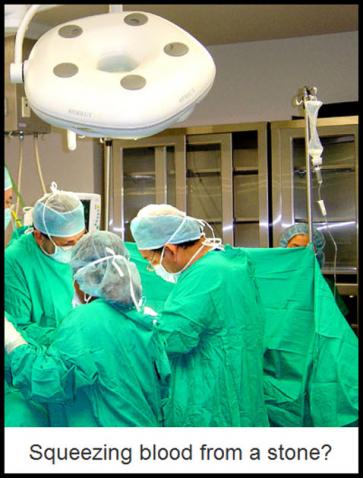
He’s not the only one who has remained oblivious to mounting evidence of deflation nearly everywhere: falling home prices, falling wages, falling rents, falling consumer credit, falling bank lending, a devastating collapse in financial assets, massive cutbacks in state and local budgets, the absence of pricing power for most consumer goods, etc.. Some might argue that the price of health insurance and college tuition have been hanging tough. Oh really? We see health care moving toward triage and rationing because it has become manifestly unaffordable for businesses and individuals alike. Under the circumstances, how much more medical inflation can we expect? Or do you buy the wildly popular, albeit counterintuitive, idea that “The Government” will somehow be able to afford for us what we can barely afford for ourselves?
Cutthroat Colleges?
Regarding college tuitions, we are on record with a prediction that the Ivies and top private schools will be going for each other’s throats within five years, lowballing the price of an online degree. A Princeton B.A. for $12,000 sounds about right to us. The impending deflation of college costs seems like a no-brainer at the moment. A college education has never really been affordable for most Americans, but it became even less so over the last 20 years, when the quest for that all-important sheepskin became a household obsession. Even parents who were ordinarily frugal did not hesitate to borrow against the inflated value of their homes to put their kids through school. Few imagined that this would prove to be a risky bet, but the collapse of home prices in the U.S. changed that. So where will parents get the money now? We really don’t know. But the colleges are in for a rude awakening if they think the money will come from “somewhere,” as it always has. Uncle Sam has placed Sallie Mae on steroids to help make up the shortfall, but we don’t see that as an answer, since housing collateral will be missing from the equation.
For decades, health care, college tuition and government spending have been intractable engines of inflation. Of the three, only the Federal portion of government spending remains so. To say that we have serious doubts that it can compensate for the fatal weakness in the other two would be an understatement. Why? Simply because any spending measures the Federal government undertakes to lift the economy must be financed by debt. If inflationists cannot see the endgame of this strategy, they deserve all the scorn and ridicule we can heap on them.
(If you’d like to have Rick’s Picks commentary delivered free each day to your e-mail box, click here.)
Part of the Credit Cardholders’ Bill of Rights Act signed by president Obama attempts to limit risk for individuals under age 21. To protect lenders, people under that age must have a co-signer involved in the credit or loan process, or the total amount borrowed cant be more than 20% of the individuals income. The main issue with using credit cards is the amount of interest that can add up over time, more education for students about the credit card cycle is needed, so that no one falls into a situation that requires bankruptcy.