(Editor’s note: We wrote here yesterday that mortgage forgiveness would crater the housing market to much greater depths, with homes ultimately falling 70% from their peak values. The following response, from “Donniemac,” was one of the more interesting posts in the Rick’s Picks forum. He sees signs of a recovery, but also the death of the America Dream for many chastened borrowers.)
Loan balances are either paid by the bank or the lendee. Therefore, the someone who is going to “pay” for the housing bust is the banking industry. And, eventually, the taxpayer probably will be called upon to prop up the banks — maybe through very liberal tax write offs of bad debt or through another round of bailouts, who knows? What the collective “we” need to have happen is to have the current economic growth be real. I know that doom-and-gloom attitudes seem to be the norm, but from my view, a return to a functioning economy is slowly becoming a fact. But there will be a large number of citizens who will have their lifestyles drastically altered — in particular, early boomers who are, say, 55 or older and who did not create any savings to speak of. I know, as my wife and I have a family full of them. And some of them are running scared. But I am off-topic. As the economy starts to gain some momentum, the pain of deflating the housing bubble can be eased, hopefully enough to not put economic activity back into a tailspin.
The big unknown, IMHO, is how are the masses going to react to not being able to satisfy their consumer itch at the flick of a piece of plastic? For sure, the extension of unsecured credit, or credit lines secured by home equity, is going to be greatly curtailed. This is being seen by raising of credit scores to get mortgages, or good car financing, or something other than an 18% rate on a credit card. What I think is going to happen is more of a stagflation period similar to the 1970s as we unwind the debt bubble and return to a more 1950s/1960s-like period of credit usage. People will be employed (and will hopefully learn how to save), real estate and real money (when I first learned of gold, this is what it was called) will appreciate in fiat money terms. And that will allow the bubble to deflate. At some time in the next ten years or so, fiscal conservatism will become the norm. Those of us who have practiced that in our private lives will celebrate a return to sanity and the next bubble will be born.
Nanny Society
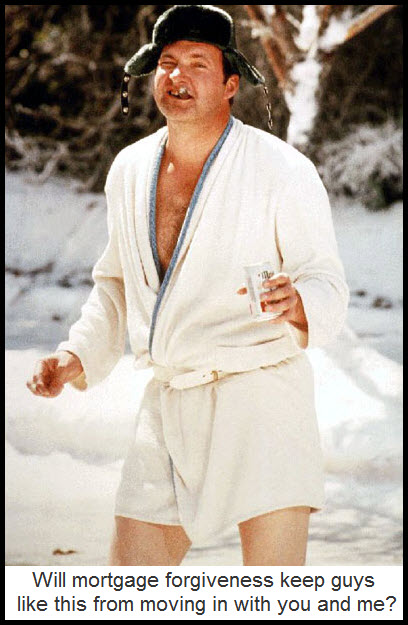
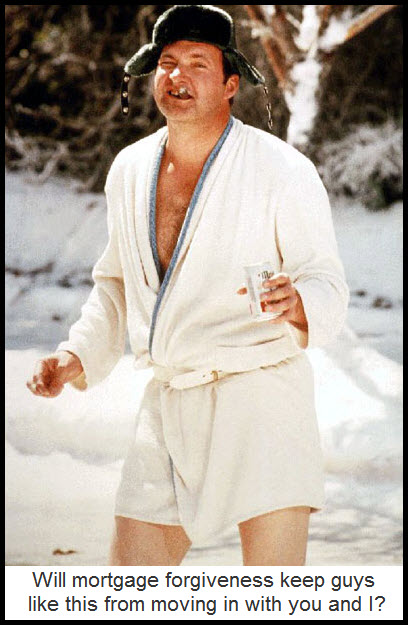
You are correct about those of us who will not see balances reduced (as we did not allow ourselves to get into trouble) being angry about paying for the sins of my irresponsible family members. But the reality is we all pay for the dummies. I used to be opposed to laws that protect people from themselves and create a nanny society. But I have slowly come to the realization that those laws also protect me from the irresponsible. So, as I pay for some idiot who cracks his head open when he falls off his motorcycle, I become a supporter of that person losing a bit of his freedom through mandatory helmet laws. And thus it goes. For we all pay, one way or another, for the less mature and responsible among us. So back to the anger of seeing my brother get “bailed out,” I will get over it, as that is better than the alternative, which is to have him come live with or off me.
(If you’d like to have Rick’s Picks commentary delivered free each day to your e-mail box, click here.)
![Reblog this post [with Zemanta]](http://img.zemanta.com/reblog_b.png?x-id=22edb256-32a6-4050-8377-e8647d22922f)
I agree. This is exactly the philosophy behind the attempt to harmonize socialism/communism and capitalism/free markets.
There are no free markets. That is an illusion. If you let markets go completely free they clash the latest with the judicial system (and they foster the Cheneyan form of modern state protected piracy, or rigging the game).
Now, is the judicial system where economical questions ought to be answered? I think not.
So it is more like Barney Frank said. It is not about regulation or no regulation, it is about good, efficient, accident-defensive, but opportunity-aggressive regulation.
Opportunity-aggressive regulation for the good of mankind and the markets can be an artform, we haven´t even started to learn, I think. There´s room to excel.
A helmet for a motorcycle is an opportunity-aggressive regulation. It obviously saves talent and money. But it does not curtail the center advantages of motorcycle riding, many of which being emotional, driving the market. All that for 70$. Making the motorcycle and helmet maker wealthy.
Lean regulation. Dynamic regulation. Learned regulation written by the Buffets, Bransons, Gates, and the Mittals. Not by the lawyers. Not that Obama thinks he has reason to smile.
Economics is like hunting. Without the deer dead on the table, even good instructions remain academic, so the instructions must come from a real deer hunter.
Therefore regulation itself must become part of the global free market of ideas, without any Krugmans or Bernankes standing in the way.
This “self-regulation” of the quality of regulatory ideas has now become possible through the open global communication standard.
Mentally and psychologically – and genetically, in memoriam – Rumsfeld´s “old Europe” is ahead of that learning game through severe aristocracic spiritual and monetary default, Adolf Hitler and Stalin and reconvalescence from that test into modern democracies through excellent knowledge and the will to live on.
I think everybody in this world has grown a lot stronger in the past decades than some gloomists think.
It is an act of pragmatic balance, not of ideology.
The principle of solidarity in modern democratic systems is not wrong and calling it socialism at every tweak is hysterical.
In Europe, we might bicker about our health care system from morning to evening, but come try take it from us, rich or poor, you stand no chance, I dare claim.
But the Lady remains a hot senior analyst in warning us: “the problem with socialism is that one day you run out of other people´s money.” Avoid the extremes.
In the US, the problems with this idea can arise through simple geography. The neighbor can be far that I am asked to show solidarity with.
And it requires the fool-proof registration of the citizen at various points in life.
Because, sometimes it seems I wish to shout at “The” Republican (of today): man, if you talk like that you must come to the ER and say no to the 13 yr. old girl without healthcare. Otherwise your talk remains purely academic. You cannot say no to the girl. You ought not. You won´t. You know it.
So there has to be a solution that avoids the most expensive station of any hospital, the ER.
—
We must learn to balance out socialism and capitalism and we will see that the new whole maybe more than it´s parts.
A crisis is the chance. Rome failed for other reasons than just monetary ones. It failed in it´s spirit.
If this crisis ignites the Thomas Jeffersons and Benjamin Franklins in the US citizens, there might be other scenarios for the new normal.
I think the US is in a state of puberty. It will only ripe and become all the better. It is like a kid trying drugs. Uuups, debt IS dangerous, no matter what it was spent for. Aha. Ouch. And lead again as one among his peers: through creativity and excellence.
The really good stuff I still read here – on the US pages.
Happy Easter. Shalom and salamaleikum and om.
P.S.: Can anyone help? How can one invest (derivatives/leverages) from Europe into RA´s picks? Does anyone have a tip? I hope this is not a stupid question.