
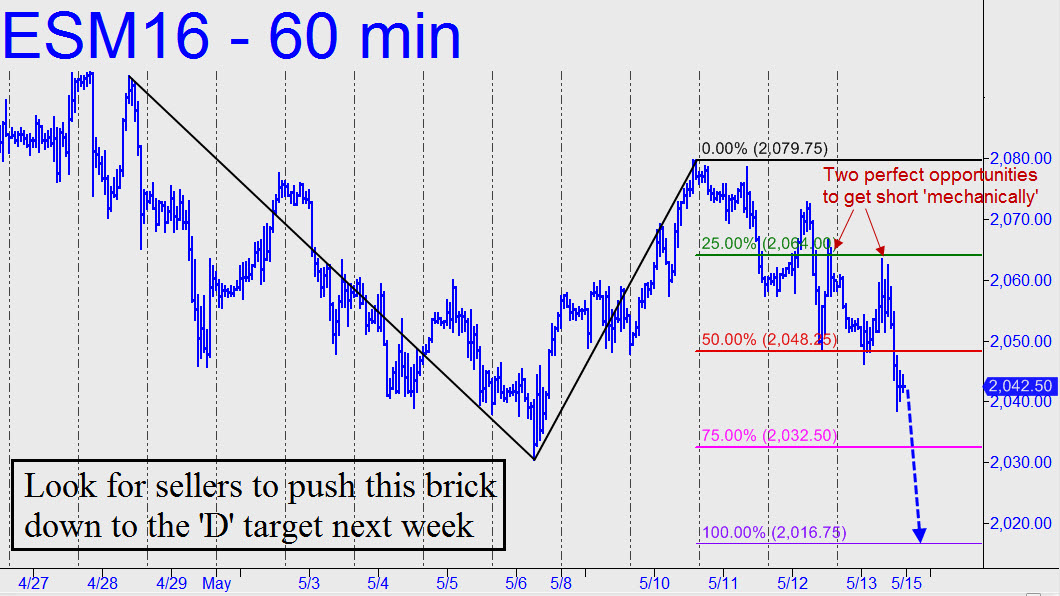
 The quite-bearish, 2016.75 target that I sent out Thursday night still looks good, as does the punitive ABC pattern from which it was derived (see inset). The futures fell Friday by only 40% as much as I’d projected, but they looked so bad in the process that we can be confident sellers will finish the job when trading resumes next week. For the record, my guidance missed the best trading opportunity of the day, since, just to be extra cautious on a Friday, I suggested a ‘mechanical’ short from any Hidden Pivot level other than ‘x’. When the dust settled on Friday, however, it turned out that a short from ‘x’ was the only ‘mechanical’ entry that would have worked — perfectly — based on the current pattern. In any case, p2 remains as a potential spot to get short belatedly provided you know how these trades work.
Let me emphasize yet again that the decision concerning whether to initiate a mechanical trade rests on one judgment and one judgment alone: the confidence that a trading vehicle will reach its D target come hell or high water. Yes, the decision is therefore subjective. But if you just ‘know’ in your gut that a D target is going to be achieved, then you will make money on mechanical trades as often as that gut feeling is correct. A learned instinct, to be sure. Fortuitously, some patterns, to me at least, have ‘D’ written all over them. The more such opportune patterns you are able to recognize, the more remunerative your time spent trading will become. The salient advantage of the mechanical trade is that once you have committed to it, there are no more decisions to make, since stops and risk management are automated and strictly by-the-numbers from the entry point forward.