The widespread notion that a U.S. president can significantly influence the economy is mistaken. In observable fact, the broad cycles that bring us good times and bad, booms and busts, are vastly larger and more powerful than the presidency, too overwhelming to even affect, let alone command. Even the radical policies of Roosevelt’s New Deal were insufficient to end a depression that had taken more than a generation to gather force. America’s eventual emergence from those very hard times happened gradually during the administrations of Truman, Eisenhower and Kennedy. Moreover, the post-war rebuilding process that made Europe and Japan America’s best customers arguably would have happened cyclically without a Marshall Plan, and the U.S. financial system would have receded naturally from the fiscal excesses of a war that itself was an uncontrollable cyclical event.
In this view, Kennedy, Clinton, Obama and Biden were simply lucky to have been elected with the economy and the stock market at cyclical lows. For in no way did they cause the upswings that shone on their terms in office, nor the felicitous shifts in the mood of consumers. The bullish cycle had to have been particularly strong to survive the misbegotten policies of Obama, the first president to revile American exceptionalism, if not America itself.
Surfing the Big Wave
Which brings us to Trump, the president who has come closest to affecting the economy both inside and outside the U.S. Trump inherited a fiscal blowout impelled by the covid hoax, but he has since turned it into a credit and fiscal bonfire that can only end in ashes. Trump has merely extended an especially powerful upswing that he did nothing to cause. It should have ended with the senile Biden and his autopen administration, but Trump’s aggressive economic activism kicked already booming asset values into high gear. It is no ordinary boom, but rather the spectacular finale of a Grand Supercycle that long-wave forecasters date back as far as the 1700s. It was logical and perhaps even inevitable that the coming, severe downturn should have summoned so grandiose a personality as Trump to stage a last hurrah.
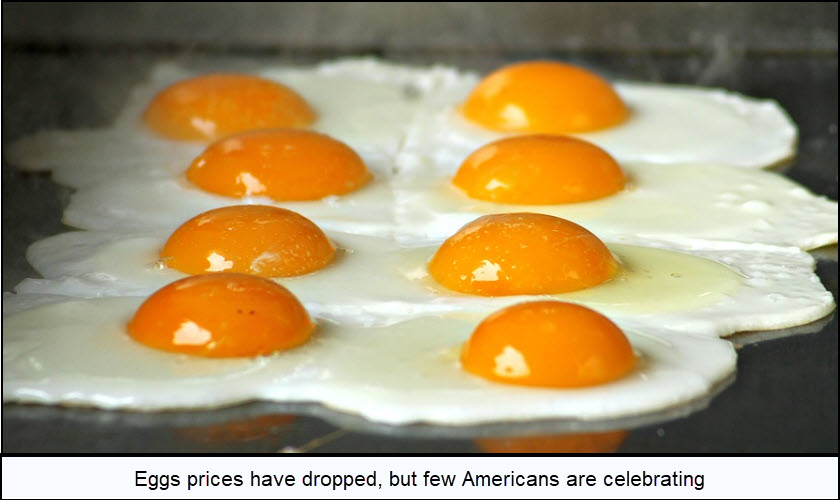
His popularity and credibility have already peaked with his all-in bet to give Americans ‘affordability’. This should have been apparent to anyone who watched his relatively short, heavily stuffed speech last week. Trump trotted out charts and tables to show how the cost of eggs, gasoline, poultry and such have begun to fall. Well, whoopee doo. But even if half-price Ozempic for every American were to arrive before midterm elections, the nation will still be dealing with the deeply structural, intractable problems of unaffordable big things: housing, healthcare, insurance, college education and automobiles. Trump’s affordability promise is doomed to failure, and every American senses this. His hubris will put a fitting end to the Grand Supercycle, and it is the reason why the stock market has seemed so dead-tired lately. [For an earful on silver, AI and ‘lunatic-sector’ stocks that have begun to sputter out, click here for my latest rant at HoweStreet.]
I promised myself that I wouldn’t indulge in any political/”economic” negativity during the week of Christmas. And though it is technically still on, Christmas Day has passed, so… THE GLOVES ARE OFF!
Trump and his retarded clapping seal cult won’t ever realize let alone admit that he has blown it not just on the economy and affordability, but in protecting freedom as well. The latter is what I will focus on today. His words and orders concerning AI literally enslave us, ENDLESSLY, to the mega-zillionaire, no-IQ “tech bros”…
https://youtu.be/FnlgwyVahCY?list=PLvPYIVrUSvJTtKYGmG3FwV9jZ1PqO2T73
But for all that WASTEFUL AS FUCK dystopian bullshit, AI = REAL STUPIDITY…
https://youtu.be/dcolM6W5Odc?list=PLvPYIVrUSvJTtKYGmG3FwV9jZ1PqO2T73
Trump: If we don’t make ourselves dumber through AI, then CHINA WILL WIN THE AI RACE! Then you’ll all be real sorry you wouldn’t support me in running roughshod over State rights and personal freedom and giving really rich people everything they want at your perpetual expense! I’m great, the economy’s great. Greatness is great only because I’m great enough to make greatness great! Otherwise, China would win and make greatness great! Woke people are against greatness, so you must be for it!
I would say more, but I’ve already surpassed my limit for talking about dumbass things. I can’t talk about how stupid anything is, for the next ten years, because of Trump!