
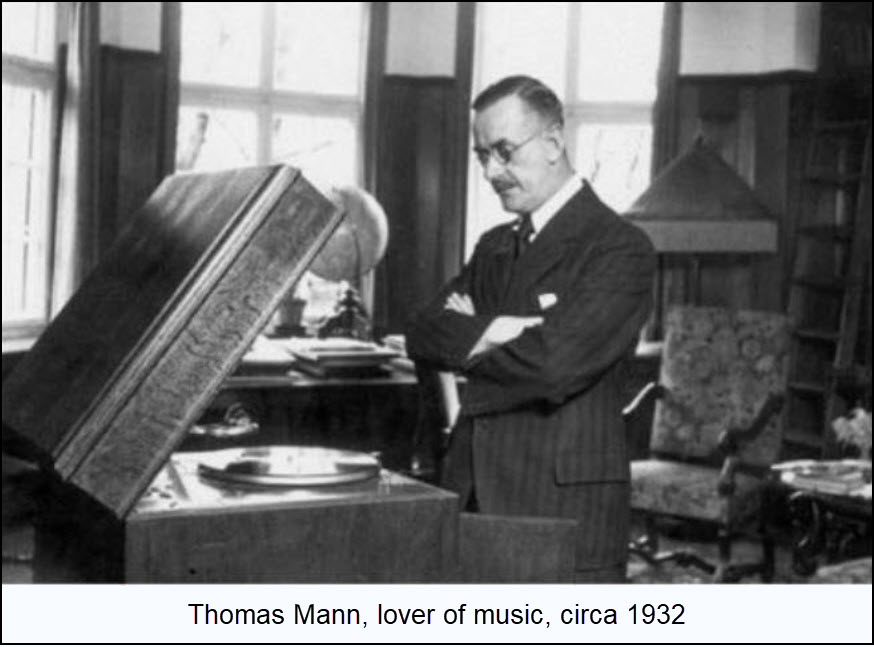
My regular commentary will resume next week when I my return from a busman’s holiday on the West Coast. In its place is an excerpt from Thomas Mann’s The Magic Mountain that holds an epiphany for the way we experience and recall the passage of time. It has been published here before, but this version was masterfully shortened and simplified by ChatGPT so that more readers could understand and appreciate it. The original can be found in the chapter “Excursus on the Sense of Time” in several translations. RA
There is something peculiar about deliberately settling into a new place—making the effort to adjust, to feel at home—only to leave again once that adjustment is complete. We insert such intervals into our lives as a kind of restorative break. They are meant to refresh us when the steady sameness of daily routine has begun to dull and weaken us. But this dulling is not simple physical or mental fatigue; if it were, rest alone would cure it. The real issue is psychological: when life becomes too uniform, our sense of time fades. And because our awareness of time is bound up with our awareness of being alive, when one weakens, so does the other.
We commonly think that interesting experiences make time pass quickly, while monotony makes it drag. That is only partly true. Monotony does make hours feel long and tedious. Yet over longer stretches it has the opposite effect: it compresses time. Large, uniform periods shrink in memory until they seem to vanish. By contrast, rich and varied days may fly by in the moment, but they give weight and substance to life as a whole, so that years filled with variety seem fuller and longer than empty ones that slip away unnoticed.
Sameness Brings Tedium
Tedium, then, is not the lengthening but the abnormal shortening of time tough sameness. When every day resembles the next, they collapse into one; complete uniformity would make even a long life feel brief, as if it had stolen past us. Habituation is a kind of sleep of the time-sense. This is why childhood seems long, while later years accelerate.
We therefore seek change and novelty to revive our sense of time and, with it, our sense of life. Travel, cures, holidays—these work because new surroundings broaden time’s flow. The first days in a new place feel expansive, perhaps for a week. Then familiarity sets in, and time begins to contract again. Anyone who clings to life can feel how, toward the end of a stay, the days grow lighter and scurry past like dry leaves.
The effect lingers briefly after returning home: the first days back feel fresh and spacious. But we adapt more quickly to the ordinary than to the exceptional. If age—or low vitality—has already weakened the sense of time, the renewal fades almost at once. Within a day it can feel as though we had never left at all, as though the journey were no more than a brief watch in the night.