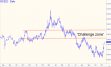
Gold has been spitting fire for the last two weeks, so it's doubtful buyers will be deterred by the weighty' external' peak at 1824.60 looming just above. For all the times bullion has disappointed us, reaching a full gallop and then dying, this time the rally looks like the real deal. If and when it pushes above 1824,60, we may have to trade disappointment for tedium, however, since supply is thick above that peak all the way up to 1900. Depending on how quickly buyers chew through it, we could be looking at the long-awaited move that would take gold above $2000 and keep going.
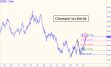
December Silver struggled unsuccessfully all week to punch through a clear Hidden Pivot resistance at 21.905. However, the slight poke above it on Friday, along with the shallow pullback to end the week, suggests buyers are ready to take on an important 'external' peak a 22.80 recorded the first week of June. Just above it lies a 'voodoo' number where the futures would be an opportune short, albeit only for a tightly-stopped scalp-trade.
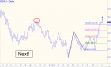
GDXJ has risen in six of the last sessions, generating a very powerful impulse leg on the daily chart that has yet to correct. If buyers take this vehicle above the circled peak at 35.26 on Monday or Tuesday, it would suggest bulls are about to dominate for the foreseeable future. Presumably, they would have an easy path to 37.81, where the next 'external' peak lies. It was recorded in June and does not look like it will pose much of a problem. _______ UPDATE (Nov 15, 9:50 p.m.): A failure to surpass the 35.26 peak is not the outcome we should have expected from a prospective nascent bull-market. Let's see if buyers can improve on this discouraging performance with a few more days of rest or a running start from lower levels.
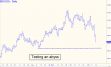
Friday's frightening plunge to 106.28 came within a hair of triggering a 'voodoo' buy signal, although I can't say I'd have been eager to act on it. It was the worst week for the dollar that even old-timers can recall, but still 'merely' corrective of the astounding bull leg begun in May 2021. Most immediately, if DXY takes out the low, it will be telegraphing a test of an important structural low at 104.74 recorded back in August. Beyond it lies yet another chasm with a 101.30 bottom. That would represent a correction of a little more than 50% of the 2021-22 bull.
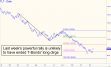
Last week's rally, powerful as it was, seems unlikely to mark the end of the long and all but relentless dirge in Treasury Bonds. The uptrend would need to continue to 100.91, surpassing a small but technically significant 'external' peak recorded on October 11, in order to generate an impulse leg on the daily chart. It would be the first such signal since August, but obviously no guarantee of higher prices. For now, we'll assume that if and when this vehicle relapses, it will be bound for the 86.48 target shown in the chart. _______ UPDATE (Nov 16, 9:55 p.m.): Buyers pushed past a series of external peaks effortlessly, bolstering the case that a major bull move is under way. The next significant obstacle lies at 104.86, where an important high was recorded on Sep 30.
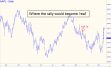
AAPL's canny handlers squeezed the world's biggest-cap leviathan effortlessly higher last week, presumably adding many billions of dollars to the 'wealth effect' created by the stock market's so-far middling bear rally. The stock looked bound for a shortable, minor Hidden Pivot target at 151.26 (30-min, A= 134.59 on 11/9; B=143.70 on 11/10). However, it would take a print at 158.75 (see chart inset) to suggest this 10-percenter is destined for bigger things. That would exceed an important 'external' peak on the daily chart, generating the strongest impulse leg since late July.
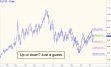
Crude has spent so much time churning in the mid-to-high 80s since March that one might as well flip a coin to guess where it's going next. Presumably nowhere, or at least not far, but we tend not to short that outlook too aggressively, since crude is legendary for taking a story and running with it -- in either direction. My coin-toss produced a mildly bearish chart that, regardless of price action in the week ahead, can serve as a framework for trading. It is neutral at the moment, having failed to reach p=82.97, an enticing spot for bottom-fishing. Nor did Friday's upthrust to the green line trigger a 'mechanical' short, since it came off a low above p=82.97.
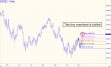
How very coy for the futures to have ended the week a single tick below 4000, a number so psychologically fraught that it winds up being meaningless. More significant is the fact that the rally exceeded the D=3990.75 Hidden Pivot target of the pattern shown. This is bullish and implies the futures will continue to move higher in the week ahead. If you trade this vehicle, check out my posts in the chat room on Thursday and Friday for more specific guidance. ________ UPDATE (Nov 15, 10:30 p.m.): The chart suggests the 4041 target flagged in the chat room hit a near-bullseye. However, the 9-point overshoot was anything but, given the gnarly perfection of the pattern; it should have been an exact hit, give or take a few ticks. The implication is that the target was front-run, the uptrend will take another leg up, or both.
[The following guest editorial was written by David Isham, a real estate investors from Northern California and long-time Rick's Picks subscriber. RA] Gold Loses Status as Haven, declared a headline in the Wall Street Journal on September 22. Two days later gold fell to $1629, the lowest daily close in more than two years; then it began an ascent that has continued to this day. A case of yet one more cover-story curse signaling a major trend change? Quite possibly. The backdrop for gold's rise is a commodity bear market that dragged along for 48 years but which appears to have bottomed in 2020 with a false breakout in the CRB Index. False breakouts often signal trend reversals, and so far this indicator seems to be working. The commodity bull has unfolded with enough vigor, seemingly, to last for a decade or longer. As for gold, it recently began to show signs of life following a steep selloff begun last March. The GDX:GLD ratio that tracks the relationship between mining stocks and the price of gold looks like it is breaking out, with miners outperforming bullion. This is usually an early sign that the precious metals market is about to shift into high gear. Still Plenty of Time Because gold and silver can be expected to make their biggest percentage gains near the end of their respective bull markets, there is still time to board the train and start accumulating. Before this bull market has run its course, I expect gold to hit $10,000 per ounce, and silver $350. A barrel of oil will be quoted at $250, and the HUI Gold Bugs Index, currently trading for around $275, will be trading north of $1,200. Furthermore, the implosion of crypto is very bullish for junior miners, since speculative money will
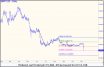
I discontinued coverage of bitcoin a while back because its slow death had become too boring to watch. The grim reaper picked up the pace this week, however, spooking this bitcoin proxy into its biggest two-day plunge since June. If Bertie finds no support at the secondary pivot (p2=15,382), you can assume it's headed down to the 'D' target of the pattern, 12,108. The ABCD here looks too obvious to deliver bounces precisely from those two Hidden Pivot supports, but don't be surprised if the chimps who control it try to engineer a last-ditch reversal from midway between p2 and D. They've been overdoing the same oh-so-clever trick to death in many trading vehicles, methodically avoiding heavily trafficked Fibonacci levels. That is why you should look for the turn near 13,745 if p2 is breached decisively. That would not negate an eventual move down to D=12,108, only delay its coming. _______ UPDATE (Nov 10, 6:52 p.m.): Bertie has bounced tentatively from within 1.4% of the 'secondary pivot' at 15,382 noted above. The rally would need to surpass the September 13 peak at 22,761 to suggest it's capable of closing decisively above the psychologically important 25,000 mark. ______ UPDATE (Nov 25): Bitcoin bag holders know they're in over their heads, and that's why they have been waiting with increasing desperation for an opportunity to goose this cinder block into a nasty short-squeeze. So far, though, even when the stock market has spasmed into one of its doomed flights of fancy, the cryptos have disappointed. Too many investors want out, including even major-leaguers who continue to talk their book. The only thing they've got going for them at the moment is a stubborn Hidden Pivot support at 15362 that has supported three weak bounces since first being nearly touched on November 9. _______


