
After head-butting a seemingly impregnable Hidden Pivot resistance at 368.70 for two weeks, the Cubes pushed slightly above it last week, signaling their unwillingness to be contained. The target offered a potential finale to a bullish ABCD pattern launched last Halloween, but in order to come up with a higher one, we'll need to go back an additional six months for the start of an even bigger pattern. It is shown in the inset and projects to 382.75, a number you can use to target call butterfly spreads with perhaps a month of time left on them. Thereafter, we'll want to get short if and when 382.75 is achieved -- again using well-out-of-the-money (put-option) butterfly spreads. Alternatively, it will always be possible to short the underlying in a way that doesn't depend on its reaching the target. I will provide timely tactics for doing so if there is sufficient interest in the Trading Room. ______ UPDATE (Aug 30, 6:25 p.m.): The Cubes are within millimeters of the longstanding rally target at 382.75. (AAPL is close to its own major target; check out the chat room discussion, which includes detailed guidance for getting short.) To short QQQ speculatively, we'll try to leg into 340/345/350 put butterfly spreads -- first by bidding 0.18 for a dozen Oct 1 350/345 vertical put spreads, 1:1, good through Wednesday. Note: They will become easier to buy at that price as QQQ makes its way toward the target, but you can pay up to 0.20 if it feels close. ______ UPDATE (Sep 1, 7:33 p.m.): The short squeeze to a record-high 382.71 on the opening bar has left me as curious as you are about what will happen next. It'd certainly be nice to nail a major high within 0.03 points. We shall see. _______ UPDATE

Last week ended with a push slightly above the top of a trading range that has contained DIA since May. As far as breakouts go, it is so undramatic as to be unworthy of that description. However, since a finishing stroke to the 364.31 rally target has never been in doubt, we'll infer that DIA is at long last on its way there. Because of the large expanse of time consumed by this lethargic bull trend, the only option strategy that would have worked all along was a covered write. Meanwhile, any put butterflies we may have bought along the way would have expired worthless, but they served as a cheap way to leverage the unthinkable. We can still butterfly the rally target with calls, but I'd suggest going out no further than six weeks and paying no more than 0.20 per 'fly. If you are unsure of how to do this, there is a recorded lesson on butterfly spreading accessible on your account page. ______ UPDATE (Aug 21): The bull is beginning to look winded. Although that doesn't necessarily mean 364.31 won't be achieved, we should still be alert to the possibility of a lazy rollover that mutates into a bull-killer. If DIA hasn't traded above 352.70 by Thursday afternoon, nor below 350.00, consider buying a few Sep 30 $10 put butterflys centered on the 340 strike for 0.10 or less. A free mini-course on butterfly spreading is accessible via your account dashboard. ______ UPDATE (AUG 23, 11:19 p.m.): Today's lunatic leap made DIA seem like less of a laggard. If it continues, a decisive push above p2=354.45 of this pattern would put D=356.82 in play. That would be a downpayment on the still-viable 364.31 target of the larger pattern noted above.
Bloomberg missed the real news in its flippant headline, "Return to the Office Five Days a Week? How About Never Again". The article was just family-page pap about how work-from-home employees aren't complaining about the indefinite postponement of a back-to-the-office mandate. With the delta variant on a headline rampage, exile in suburbia seems to suit most of them just fine, and to hell with the 6:00 a.m. commute. The much bigger meaning of this is certain to become the subject of newspaper headlines in years to come, when America's biggest cities are further along the road to bankruptcy and obsolescence. Bloomberg's editors will probably be the last to see this trend developing, so eager have they been to cheer-lead New York City's supposed recovery from the lockdown. They would have readers believe, for one, that the billionaires who fled to Florida, which has no income tax, are eager to return to the Big Apple, where they would face an 11% income levy just for the privilege of watching DeBlasio run New York even deeper into the ground. Paper-Shuffling Sector Bloomberg.com's blithe optimism aside, it's painfully obvious that the U.S. economy, most particularly the colossally large paper-shuffling sector, no longer needs skyscrapers to conduct business. Nor will workers have much use for the services and amenities associated with those skyscrapers and with city life itself. This implies that buses, trains, trolleys and taxicab fleets, restaurants, stores, concert halls, parks, theaters and so many other things that make urban living worth the hassles will be used less and less over time. Do you see the economic problems this will create? If Bloomberg's editors do, they didn't say so; for nowhere in the article was there any mention of the fact that user-based revenues associated with urban amenities will either have to be
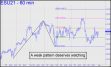
A well-advertised rally target at 4113.75 served us well last week, providing the rationale for long and short positions posted in the chat room that could have produced profits of $10,000 or more for subscribers who followed my simple instructions. (Nearly all of them included charts.) For all its histrionics, the September contract never closed above the target, although it did reach an intraday high of 4422.50 on Thursday. That could be the Mother of All Tops as far as we know, although I doubt it. For now, we can use the tepidly bullish pattern in the chart to manage our expectations as the new week begins. D=4439.75 can serve as a minimum upside target, although I wouldn't suggest trying to extract any more 'mechanical' 'buys' from this pattern. For the record, it has yet to give a bad signal, implying we can look forward to shorting at 'D' if and when it is reached. This would likely be by way of an rABC pattern, so stay tuned to the chat room if you care. _______ UPDATE (Aug 2, 5:32 p.m.): I'd like to see a close above last week's highs and a pop that seems to jettison the 4413.75 resistance. That's what I think it would take for Mr. Market to set the hook. The flat top created by the last seven sessions looks too wishy-washy to have sucked in bulls with the kind of trap that brings drama. Neither has it given bears relief nor the kind of acute pain that's needed to crush the last of them in this minor bull cycle. _____ UPDATE (9:05 p.m.): I'm not so sure we're going to see that last head-fake above my prospective major top at ES 4413.75. Lockdown 2.0 is coming, and it's going to finish off all of
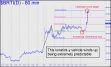
Although bitcoin is known for extreme volatility and savage ups and downs, it winds up being the most predictable and tradeable of all the vehicles I track. I cannot recall the last time a mechanical buy in BRTI did not produce a fat profit, and that's going back a couple of years across trends both minor and major. I've established a tracking position for this move because a chat room regular used the pattern shown, buttressed by my explicit guidance, to get long 'mechanically' at the green line. Although I've warned about the thick layers of supply bitcoin will encounter above 40,000 enroute to possible new record highs, there is zero doubt at the moment that this thrust will reach the 44,953 target first broached here last week. Plan on shorting there aggressively if you've made money on the way up. _______ UPDATE (Aug 3, 4:35 p.m.): Ratcheting torture has stopped out bulls no fewer than six times since Sunday night's peak at 41,806. Rick's Picks subscribers appear to have avoided the rapid-fire treachery with a 'mechanical' entry at x=38,526 on Monday. It's under water at the moment, but I still rate the trade '7.2'. The stop-loss is at 36431. _______ UPDATE (Aug 4, 10:31 p.m.): After dipping below the green line, BRTI bounced $2400 to 39,949 putting our position nicely in-the-black. Most subscribers who reported doing the trade in the chat room seemed to have taken a partial profit, but if you haven't done so, exit half here (at 39,374) and use a 38,305 stop-loss for the rest. _____ UPDATE (Aug 5, 10:34 p.m.,): Okay, okay, we get the picture. The psychotics who play with this loaded pistol are clearly able to aim it 10% either way, and sometimes both, on a given day. This has not affected the
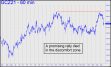
December Gold's promising mid-week rally died an inch shy of a mid-July's peak at 1839, disappointing bullion fans for the umpteenth time. The rally was impulsive nonetheless on the hourly chart, and that is why we should view the pullback, sharp as it's been, as merely corrective. We'll continue to use the 1858.60 target of a middling 'reverse' pattern as a minimum upside objective, but for trading purposes I'll suggest focusing on the bullish pattern begun from Wednesday's 1795.60 low. Stay tuned to the chat room for tradeable details as they develop in real time. _______ UPDATE (Aug 4, 8:30 a.m. ET): Gold has taken a stab higher today, slightly exceeding the midpoint Hidden Pivot resistance of a pattern projecting to as high as 1850.10 over the near term. We'll use that Hidden Pivot as a new minimum upside projection, since you can never go far wrong in gold by lowering your sights. Skeptical though we should be, a pullback to the green line (1818.70) would trigger a 'mechanical' buy sufficient appealing to warrant a rating of 7.0. We needn't treat p2=1839.60 as anything special, although a little extra caution there is suggested, assuming it is reached. Here's the latest chart. ______ UPDATE (Aug 4, 10:41 p.m.): The 'mechanical' long from 1818.70 barely survived the wickedest head-fake reversal we've seen in recent memory. All we can do now is stick with our game plan, implying a stop-loss at 1808.1, a single tick beneath today's hellacious low. It should be held o-c-o with an order to close out the position at p=1829.20. _______ UPDATE (Aug 5, 10:48 p.m.): The trade stopped out for a $4000 loss. This was the first losing trade using a 'mechanical' signal in as long as I can remember. The Hidden Pivot Method doesn't care how wacky
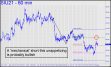
Ordinarily I would suggest a 'mechanical' short on a rally to the green line (26.19), but there's something so unappealing about this pattern that I'm more inclined to get long, provided we can find a proper set-up to do so. It's not as though bears have shown much strength or enjoyed much success betting the 'don't pass' line. The 24.04 'D' downside target will remain theoretically viable nonetheless, but my hunch is that it will be negated this week with a push above C=26.91. ______ UPDATE (Aug 5, 10:52 p.m.): So far, my hunch has been wrong. Still, bears have no real power over Silver other than to bludgeon it do death for a couple of hours at a stretch, so I won't get too exercised yet about the prospect of a full-blown sell-off to D=24.04. That doesn't mean I am hankering to bottom-fish, however. ______ UPDATE (Aug 6, 10:34 a.m.): The futures have gotten pounded so hard today that the 24.04 downside target now looks very likely to be hit. Here's a chart for those who enjoy bottom-fishing. I like the odds.
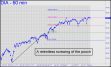
The Dow Industrials have been screwing the pooch for nearly four months. That's when DIA first popped through a midpoint resistance at 335.00 that is associated with a long-term rally target at 364.31. However, this ETF vehicle has since failed to break decisively above p2=349.65, keeping the outcome in limbo and making DIA a very unappetizing trade, other than for covered writes and similar short-premium option positions. You can see for yourself that the graph provides little reason to think the target won't be reached. Absent a game-changing plunge exceeding mid-June's 333 low, we'll keep this tout on the back burner. _______ UPDATE (Aug 5, 10:56 p.m.): Zzzzzzzzzzzzzz.
If you're worried that interest rates are about to explode because of inflation, the graph above would seem to offer comfort. From a visual standpoint, the gentle rollover that has occurred over the last several months has sapped the vigor from a menacing spike that had pushed yields on the 10-Year Note from 0.40% at the start of the pandemic to a high of 1.76% in early April. The surge also failed to surpass previous highs near 2%, suggesting there is considerable resistance at that level. For the time being, this holds positive implications for the U.S. economy, since T-Note rates largely determine how much mortgage and corporate borrowers must pay for loans. It also helps to sustain the illusion of a stability in the global banking system. That's because even a small tightening of the interest rate screw would have dire consequences if applied to the $2 quadrillion of borrowing amassed in the derivatives market. These financial instruments are used ostensibly for hedging, but over time their use has expanded to accommodate leveraged speculation on a cosmic scale. A Network of Nerves What would it take to crash this market? No one has a clue, although it is probably fair to say that it is as complex, and therefore ultimately as fragile, as a human nervous system. The synaptic connections are based on trust rather than neurons, however, and that is why a systemic failure would likely be total rather than merely in one "hemisphere" or the other. A further implications is that if stress levels got high enough, something akin to a stroke would result. Fortunately, with ten-year rates at a current 1.24%, we are well below the danger zone. That's equivalent to a blood-pressure reading of perhaps 130/80. Realize, however, that this seemingly normal reading exists only
An important strength of the Hidden Pivot Method is its simplicity. The recent success of several E-Mini S&P trades posted in the chat room suggests that it would be quite difficult to improve on the results, even using a very sophisticated system. This lesson focuses on a few Hidden Pivot basics, including our workhorse ‘mechanical’ set-up that has proven its value time and again with flexibility and, yes, forgiveness.

